
Salinity Gradient

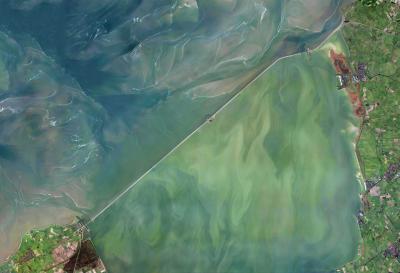
Capturing energy from salinity gradients where freshwater meets seawater.

Salinity gradient technologies generate electricity from the chemical pressure differential created by differences in ionic concentration between freshwater and seawater. Seawater has a higher osmotic pressure than freshwater due to its high concentration of salt. Two main technology types, Reverse Electrodialysis (RED) and Pressure-Retarded Osmosis (PRO), make use of semi-permeable membranes which generate an osmotic potential that can be used to generate electricity using turbines in deltas or fjords.

  • Pressure retarded osmosis (PRO): Converts the osmotic pressure of saline solutions to hydraulic pressure, which is then used to drive a turbine and generate electricity. Similar to reverse electrodialysis technologies, PRO technologies generate energy from the difference in salt concentration between saltwater and freshwater.
  • Reverse electrodialysis (RED): Generates electricity from the controlled mixing of two water bodies with different salinities. RED technology typically consists of several cation and anion exchange membranes assembled to form high and low salinity compartments. When saltwater and freshwater are fed through these membranes, the opposing transport of positively and negatively charged ions creates charged poles similar to a battery.

The primary environmental concerns associated with salinity gradient technologies typically encompass changes to water quality and impacts on the physical environment. The natural process of mixing freshwater and seawater flushes nutrient poor water and brings in nutrient and oxygen rich water, creating a unique brackish water habitat that leads to some of the most productive ecosystems. These areas are used by many organisms and are both biologically and physically diverse. Potential impacts could arise from speeding up the mixing process, altering the balance of freshwater and saltwater, or risks to organisms at intake or release points. These impacts could be reduced by releasing the resulting brackish water into the middle of the water column and using screens to cover the intake tubes. The main socio-economic concern with salinity gradient technology is diverting fresh water resources for power generation, which can be negated by avoiding water stressed or scare regions. Due to limited deployments and information on these technologies, there is much uncertainty about environmental impacts and more research is needed to fully understand potential impacts.

Marine and Wind Energy Environmental Documents

Tethys is a knowledge hub that contains documents on the environmental effects of wind and marine energy. The table below contains all of the documents in the Tethys Knowledge Base associated with Salinity Gradient.

Total: 27

Title Author Date Content Type Technology Stressor Receptor
Exploring Salinity Gradient Power in Sweden: Key Factors, Machine Learning Predictive Modeling, and Life Cycle Assessment Mohammadi, Y., Mannan, M., Fazeli, S. Journal Article Marine Energy, Salinity Gradient Human Dimensions, Life Cycle Assessment
DMEC Market Report 2024/2025: Chapter 1 Offshore Renewable Energy Dutch Marine Energy Centre Report Marine Energy, OTEC, Salinity Gradient, Tidal, Wave, Wind Energy, Floating Offshore Wind
Effects and management implications of emerging marine renewable energy technologies Copping, A., Wood, D., Rumes, B. Journal Article Marine Energy, OTEC, Salinity Gradient Chemicals, EMF, Entanglement, Habitat Change, Noise Bats, Birds, Fish, Marine Mammals
Market Potential and Sustainability: A Comprehensive Analysis of Marine Renewable Energy Technologies Bayindir, R., Senyapar, H.N.D. Journal Article Marine Energy, OTEC, Salinity Gradient, Tidal, Wave, Wind Energy Human Dimensions, Social & Economic Data
Recent Advances in Assessing Environmental Effects of Marine Renewable Energy Around the World Copping, A., Martinez, L., Hemery, L. Journal Article Marine Energy, Ocean Current, OTEC, Riverine, Salinity Gradient, Tidal, Wave Attraction, Changes in Flow, Collision, Displacement, EMF, Habitat Change, Noise Birds, Fish, Invertebrates, Marine Mammals, Physical Environment
Maripark Blueprint Ernst & Young Report Marine Energy, Salinity Gradient, Wave, Wind Energy, Fixed Offshore Wind, Floating Offshore Wind Human Dimensions, Fisheries, Social & Economic Data, Stakeholder Engagement
Identification of applicable regulation and public policy gaps regarding marine renewable energy in Mexico Rivera, G., Ortiz, M., Rivera-Arriaga, E. Journal Article Marine Energy, OTEC, Salinity Gradient, Tidal, Wave, Wind Energy, Fixed Offshore Wind, Floating Offshore Wind Human Dimensions, Legal & Policy
DMEC Market Report 2023/2024: Innovative Offshore Renewable Energy Technologies in DMEC's Portfolio Dutch Marine Energy Centre Report Marine Energy, OTEC, Salinity Gradient, Tidal, Wave, Wind Energy, Floating Offshore Wind Human Dimensions, Social & Economic Data, Stakeholder Engagement
Harnessing the Power of Ocean Energy A Comprehensive Review of Power Generation Technologies and Future Perspectives Thennakoon, T., Hewage, H., Sandunika, D. Journal Article Marine Energy, Ocean Current, OTEC, Salinity Gradient, Tidal, Wave Human Dimensions, Social & Economic Data
A Review of Offshore Renewable Energy in South America: Current Status and Future Perspectives Shadman, M., Roldan-Carvajal, M., Pierart, F. Journal Article Marine Energy, Ocean Current, OTEC, Salinity Gradient, Wave, Wind Energy, Fixed Offshore Wind Human Dimensions, Legal & Policy, Marine Spatial Planning
Life cycle assessment of salinity gradient energy recovery using reverse electrodialysis Mueller, K., Thomas, J., Johnson, J. Journal Article Marine Energy, Salinity Gradient Human Dimensions, Life Cycle Assessment
Renewable energy production in a Mexican biosphere reserve: Assessing the potential using a multidisciplinary approach Wojtarowski, A., Martinez, M., Silva, R. Journal Article Marine Energy, Salinity Gradient Birds, Ecosystem Processes, Invertebrates, Human Dimensions, Social & Economic Data
A systemic view of potential environmental impacts of ocean energy production Martinez, M., Vázquez, G., Pérez-Maqueo O. Journal Article Marine Energy, Ocean Current, OTEC, Salinity Gradient, Tidal, Wave Collision, Habitat Change, Noise Birds, Physical Environment, Fish, Marine Mammals
Environmental Assessment of the Impacts and Benefits of a Salinity Gradient Energy Pilot Plant Marin-Coria, E., Silva, R., Enriquez, C. Journal Article Marine Energy, Salinity Gradient Changes in Flow, Chemicals, Habitat Change Ecosystem Processes, Physical Environment
Ecological impact due to extraction of energy from estuaries Haddout, S., Priya, K., Hoguane, A. Journal Article Marine Energy, Salinity Gradient Ecosystem Processes, Fish, Human Dimensions, Fisheries
Life cycle assessment of salinity gradient energy recovery by reverse osmosis desalination plant Tristán, C., Rumayor, M., Dominguez-Ramos, A. Journal Article Marine Energy, Salinity Gradient Human Dimensions, Life Cycle Assessment
Harnessing salinity gradient energy in coastal stormwater runoff to reduce pathogen loading Dubrawski, K,., Wang, W., Xu, J. Journal Article Marine Energy, Salinity Gradient Physical Environment, Water Quality
Pan American Marine Energy Conference 2020 Book of Abstracts Rojas M., J., Meza, C. Conference Paper Marine Energy, Ocean Current, OTEC, Salinity Gradient, Tidal, Wave, Wind Energy, Fixed Offshore Wind, Floating Offshore Wind
Ocean Renewable Energy Potential, Technology, and Deployments: A Case Study of Brazil Shadman, M., Silva, C., Faller, D. Journal Article Marine Energy, OTEC, Salinity Gradient, Tidal, Wave Human Dimensions, Social & Economic Data
On the Marine Energy Resources of Mexico Hernández-Fontes, J., Felix, A., Mendoza, E. Journal Article Marine Energy, Ocean Current, OTEC, Salinity Gradient, Wave Ecosystem Processes, Physical Environment
Potential local environmental impacts of salinity gradient energy: A review Seyfried, C., Palko, H.., Dubbs, L. Journal Article Salinity Gradient, Marine Energy
Increased integration between innovative ocean energy and the EU habitats, species and water protection rules through Maritime Spatial Planning van Hees, S. Journal Article Wave, Tidal, Salinity Gradient, Ocean Current, Marine Energy Marine Spatial Planning, Legal & Policy, Human Dimensions
Salinity Gradient Energy Resource in Tropical Hypersaline Coastal Lagoons: Perspectives for Sustainable Use Enriquez, C., Reyes-Mendoza, O., Alvarez-Silva, O. Conference Paper Marine Energy, Salinity Gradient Ecosystem Processes, Physical Environment, Human Dimensions
Exploring Potential Sites for Salinity Gradient Renewable Energy on the North Carolina Coast and Evaluating the Potential Effects of Local Salinity Regime Variation on SAV Communities Due to Reverse Electrodialysis Effluent Palko, H. Thesis Marine Energy, Salinity Gradient Habitat Change Ecosystem Processes, Physical Environment, Water Quality
Environmental aspects and economics of salinity gradient power (SGP) processes Papapetrou, M., Kumpavat, K. Book Chapter Salinity Gradient, Marine Energy Human Dimensions
The power of salinity gradients: An Australian example Helfer, F., Lemckert, C. Journal Article Salinity Gradient, Marine Energy
Perspectives on environmental ethics in sustainability of membrane based technologies for water and energy production Tufa, R. Journal Article Marine Energy, Salinity Gradient Human Dimensions, Social & Economic Data

Displaying 1 - 27 of 27 results