



Collision
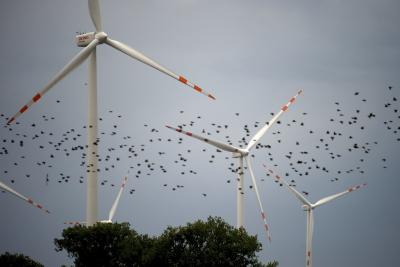
Any part of a renewable energy device that moves has the potential to have a deleterious effect on both resident and migratory organisms. Collisions between animals and tidal or wind turbine blades could result in injury or death, either by direct contact with the device or by pressure changes created around the moving parts. The probability of a collision with a blade may vary based on the rotational or mechanical speed of the moving parts, the presence and density of animals in the area, the time of day, weather conditions, and the ability of animals to sense and evade the device. Carcasses found around land-based wind turbines provide an estimate of bird and bat fatalities, while it is much more difficult to estimate the effect of collisions with offshore wind turbines. To date there have been no observed collisions of marine mammals or diving seabirds with tidal turbines. Wave energy devices also have moving parts such as heave plates, flaps, and other large heavy components that could potentially cause harm, although the likelihood is thought to be extremely small. Collisions resulting in injury and death of individual animals with moving parts of devices become particularly important if the loss of those individuals affect the stability and sustainability of the population in the area.
For more information relevant to marine energy, check out the Collision Risk Short Science Summary produced by OES-Environmental.
For more information relevant to offshore wind energy, check out the Bat and Bird Interactions with Offshore Wind Energy research brief produced by SEER.
Marine and Wind Energy Environmental Documents
Tethys is a knowledge hub that contains documents on the environmental effects of wind and marine energy. The table below contains all of the documents in the Tethys Knowledge Base associated with Collision.
Total: 1731