Wave

Capturing energy from waves.

Ocean surface waves are generated by wind passing over the ocean surface. The friction between the wind and ocean surface causes energy to be transferred from the faster moving air to the surface layer of the ocean. Wave development depends on the length of ocean, or “fetch,” over which the wind blows in a constant direction. Longer fetches with higher wind velocities will produce larger waves. Waves can travel thousands of miles with little energy loss and can combine with waves from storms and other wind-driven events to create very energetic seas. The energy of ocean waves is concentrated at the surface and decays rapidly with depth. Wave energy technologies, also known as wave energy converters (WECs), capture energy directly from the surface motion of ocean waves. WECs can be deployed at offshore, nearshore, and shore-based locations and are intended to be modular and deployed in arrays. Due to the diverse nature of waves in different regions of the world, there is a wide variety of WECs in various stages of research and development.
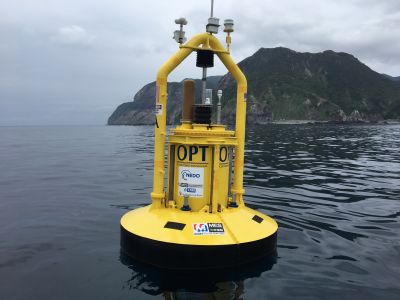
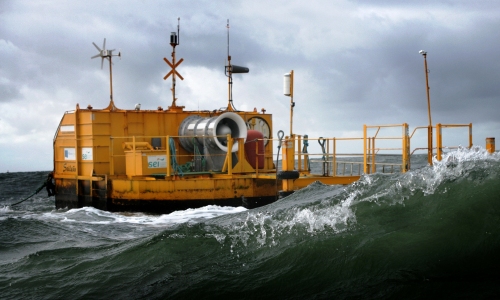
OPT Point Absorber

Point Absorber

  • Point absorbers extract energy through the relative motion between a body that moves in response to wave forcing and fixed or immobile structures. The moving body may be on the surface or submerged, and the 'fixed' body may be the seabed or another structure less affected by wave action. Their principal dimension is small relative to the length of waves they are absorbing energy from. Electricity may be produced using a linear or rotary generator, or a fluid may be pumped using mechanical force and motion directly.
  • The presence of these buoys may affect fish, marine mammals, and birds as they pose a minor collision risk or they may either attract organisms to the device or cause them to avoid the site. As with all electricity generation, there is some concern that electromagnetic fields generated by power cables and moving parts may affect animals that use Earth's natural magnetic field for orientation, navigation, and hunting. Large-scale changes in flow (from arrays) may disrupt natural physical systems to cause degradation in water quality or changes in sediment transport, potentially affecting ecosystem processes. Alternatively, devices absorbing wave energy may positively act as shoreline defense.

Photo Credit: Ocean Power Technologies

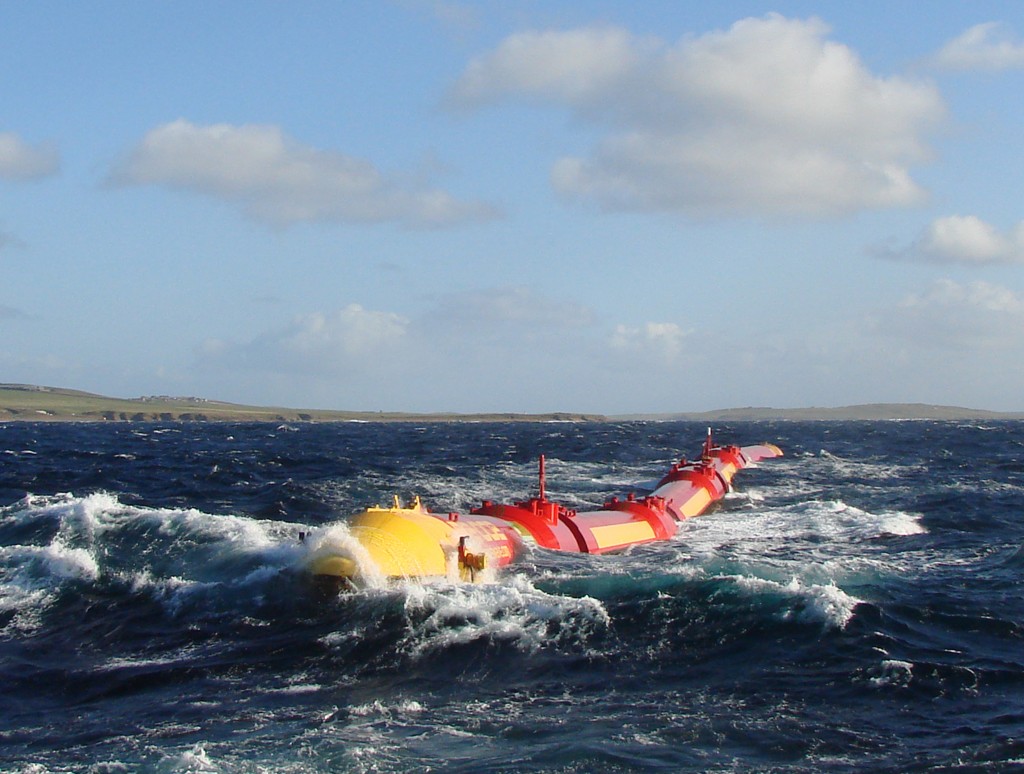
Surface Attenuator

  • Surface attenuators generally have multiple segments connected to one another and that are oriented parallel with incoming waves. They use the rise and fall of swells to create a flexing motion that may be converted into rotation or drive hydraulic pumps to generate electricity. Some attenuator designs consist of a single long, flexible surface expression instead of multiple segments.
  • Concerns about collision, attraction or avoidance, electromagnetic fields, impacts on water quality, and changes in flow are similar to that of a point absorber, with an additional concern that organisms could be pinched in the joints.


Pelamis Wave Attenuator
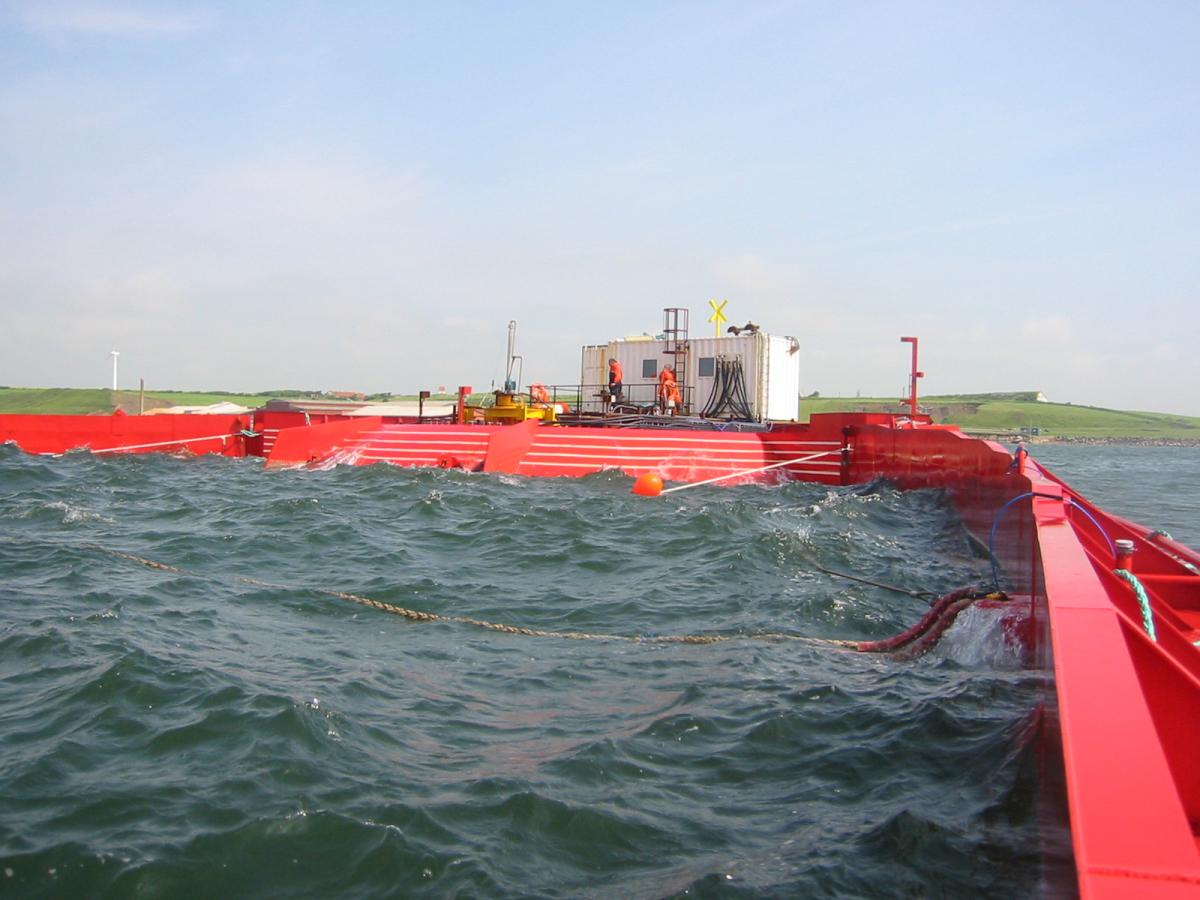
Ocean Energy Oscillating Water Column

Oscillating Water Column

  • Oscillating water column devices use wave action to pressurize air in a chamber, forcing it through an air turbine. As water recedes from the chamber, the resulting vacuum pulls air back through the turbine and into the chamber. They can be located onshore or in deeper waters offshore. The turbine may be coupled to a rotary generator to produce electricity.
  • Significant noise is produced as air is pushed through the turbines, potentially affecting birds, marine mammals, and other marine organisms within the vicinity of the device. There is also concern about marine organisms getting entrapped within the air chambers. When located offshore, concerns about collision, attraction or avoidance, electromagnetic fields, and changes in flow are similar to that of a point absorber buoy; located onshore, these concerns are no different than for a standard shoreline structure.

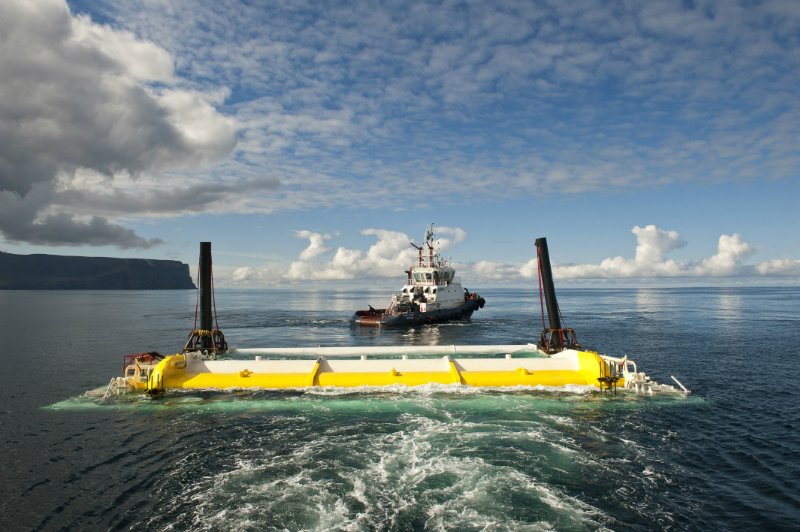
Overtopping Device

  • Overtopping devices are long structures that allow wave motion to fill a reservoir to a higher water level than the surrounding ocean. The difference in pressure between water in the reservoir and water at the surface forces fluid through a low-head turbine coupled to a generator, where electricity is produced similar to conventional hydropower. Devices can be either onshore or floating offshore.
  • There is some concern regarding low levels of turbine noise, marine organisms getting entrapped within the reservoir, or collision with the slow-moving turbines. When located offshore, concerns about attraction or avoidance, electromagnetic fields, and changes in flow are similar to that of a point absorber buoy; located onshore these concerns are no different than for a standard shoreline structure.
Wave Dragon Overtopping Device
Oyster Oscillating Wave Surge Converter

Oscillating Wave Surge Converter

  • Oscillating wave surge devices typically have one end fixed to a substructure or the seabed while the other end is free to move. Energy is collected from the relative motion of the body, driven by the horizontal motion of waves (surge), to the fixed point. Oscillating wave surge converters often come in the form of floats, flaps, or membranes. Rotary motion at a hinge may drive a generator to produce electricity, or the moving body may be used to pressurize a fluid.
  • Environmental concerns include minor risk of collision or attraction, such as artificial reefing near the fixed point. Concerns about electromagnetic fields, impacts to water quality, and changes in flow are similar to that of a point absorber.

Photo Credit: Aquamarine Power

Marine and Wind Energy Environmental Documents

Tethys is a knowledge hub that contains documents on the environmental effects of wind and marine energy. The table below contains all of the documents in the Tethys Knowledge Base associated with Wave.

Total: 1021

Title Author Date Content Type Technology Stressor Receptor
The Environmental Impact Study of the Biscay Marine Energy Platform (BiMEP) project Bald, J., Del Campo, A., Franco, J. Presentation Marine Energy, Wave Human Dimensions, Environmental Impact Assessment
Environmental impacts over the seabed and benthic communities of submarine cable installation in the Biscay Marine Energy Platform (bimep) Bald, J., Hernández, C., Galparsoro, I. Presentation Marine Energy, Wave Habitat Change Invertebrates
Environmental Monitoring Plan of the pre-operational phase of the Biscay Marine Energy Platform (bimep) project Bald, J., Galparsoro, I., Gonzalez, M. Presentation Marine Energy, Wave
Partnership for Wave Power - Roadmaps Nielsen, K., Brodersen, H., Steenstrup, P. Report Wave
Does Stability in Local Community Composition Depend on Temporal Variation in Rates of Dispersal and Connectivity? Valanko, S., Norkko, J., Norkko, A. Journal Article Wave, Marine Energy Invertebrates
Integrating Ocean Wave Energy at Large-Scales: A Study of the US Pacific Northwest Parkinson, S., Dragoon, K., Reikard, G. Journal Article Wave, Marine Energy Physical Environment
MaRINET D4.13 Report on field buoy research Johanning, L., Harnois, V., Rudolph, C. Report Marine Energy, Wave
Attitudes towards Marine Energy: Understanding the Values de Groot, J. Thesis Marine Energy, Tidal, Wave, Wind Energy, Fixed Offshore Wind Human Dimensions, Social & Economic Data
The Challenging Life of Wave Energy Devices at Sea: A Few Points to Consider Tiron, R., Mallon, F., Dias, F. Journal Article Wave, Marine Energy
Project to Assess Potential Impacts of the Reedsport Ocean Power Technologies Wave Energy Generation Facility on Migration and Habitat use of Green Sturgeon (Acipenser medirostris) Payne, J., Erickson, D., Donnellan, M. Report Marine Energy, Wave Fish, Demersal Fish
Wave farm impact on beach modal state Abanades, J., Greaves, D., Iglesias, G. Journal Article Wave, Marine Energy Changes in Flow Sediment Transport, Physical Environment
Environmental Impact Assessment Tool for Wave Energy Conversion Beyene, A., Wilson, J., Garoma, T. Report Marine Energy, Wave
Coastal Defence using Wave Farms: The Role of Farm-to-Coast Distance Abanades, J., Greaves, D., Iglesias, G. Journal Article Wave, Marine Energy Changes in Flow Sediment Transport, Physical Environment, Human Dimensions
PMEC-NETS Annual Operations and Monitoring Report 2014 Northwest National Marine Renewable Energy Center (NNMREC) Report Marine Energy, Wave Habitat Change Invertebrates, Human Dimensions, Environmental Impact Assessment
Ecological Value of Submerged Breakwaters for Habitat Enhancement on a Residential Scale Scyphers, S., Powers, S., Heck, K. Journal Article Wave, Marine Energy Pelagic Fish, Invertebrates, Fish, Demersal Fish
Session 1 Presentation - Wave Energy Converter Effects on Wave, Current, and Sediment Circulation: A Coupled Wave and Hydrodynamic Model of Santa Cruz, Monterey Bay, CA Jones, C., Chang, G., Roberts, J. Presentation Marine Energy, Wave Changes in Flow Physical Environment, Sediment Transport
Adaptable Monitoring Package (AMP) Polagye, B., Stewart, A., Joslin, J. Research Study Marine Energy, Tidal, Wave Attraction, Avoidance, Collision, Displacement, Noise Birds, Fish, Invertebrates, Marine Mammals, Physical Environment
TeraWatt Position Papers TeraWatt Report Marine Energy, Tidal, Wave Changes in Flow
Modeling of Wave Energy Absorption: a Case Study for a Fishing Pier in Brazil Dalla Vecchia, L., Scharlau, C., D'Aquino, C. Conference Paper Marine Energy, Wave Human Dimensions, Fisheries
RiCORE Project Gray, D., O'Hagan, A., Bald, J. Research Study Wave, Tidal, Marine Energy Human Dimensions
Optimizing the Wave Energy Converters by Metaheuristic Methods Neshat, M., Sergiienko, S., Xia, Y. Research Study Marine Energy, Wave Changes in Flow, Collision Marine Mammals, Human Dimensions
BioWave Port Fairy Pilot Wave Energy Project BioPower Systems Project Site Marine Energy, Wave
Environmental Risk Evaluation System - An Approach to Ranking Risk of Ocean Energy Development on Coastal and Estuarine Environments Copping, A., Hanna, L., Van Cleve, B. Journal Article Wind Energy, Wave, Tidal, Fixed Offshore Wind, Marine Energy Habitat Change, Displacement, Collision, Chemicals, Changes in Flow, Avoidance, Attraction Marine Mammals, Fish, Birds
Depth use and movements of homing Atlantic salmon (Salmo salar) in Scottish coastal waters in relation to marine renewable energy development Godfrey, J., Stewart, D., Middlemas, S. Report Marine Energy, Tidal, Wave, Wind Energy, Fixed Offshore Wind Fish, Pelagic Fish
Survey and Analysis of the Surficial Geology and Geophysics in the Pacific Marine Energy Center - South Energy Test Site area and Associated Cable Routes in the Vicinity of Seal Rock, Oregon Goldfinger, C., Romsos, C., Black, B. Report Marine Energy, Wave Physical Environment
Developing regional locational guidance for wave and tidal energy in the Shetland Islands Tweddle, J., Marengo, I., Gray, L. Journal Article Marine Energy, Tidal, Wave Human Dimensions, Marine Spatial Planning, Stakeholder Engagement
Aquamarine Power Appropriate Assessment Aquamarine Power Ltd Report Marine Energy, Wave Birds, Human Dimensions, Environmental Impact Assessment
D4.05 Non-Intrusive Wave Field Measurement Bourdier, S., Dampney, K., Fernandez, H. Report Marine Energy, Wave
Perth Wave Energy Project Carnegie Clean Energy Limited Project Site Marine Energy, Wave
Use of Static Passive Acoustic Monitoring (PAM) for monitoring cetaceans at Marine Renewable Energy Installations (MREIs) for Marine Scotland Embling, C., Wilson, B., Benjamins, S. Guidance Marine Energy, Tidal, Wave, Wind Energy, Fixed Offshore Wind Noise Marine Mammals, Cetaceans
Assessment of the Changes Induced by a Wave Energy Farm in the Nearshore Wave Conditions Bento, A., Rusu, E., Martinho, P. Journal Article Marine Energy, Wave Changes in Flow Physical Environment
Anticipated Coastal Impacts: What Water-Users Think of Marine Renewables and Why Stokes, C., Beaumont, E., Russell, P. Journal Article Wave, Marine Energy Changes in Flow Social & Economic Data, Human Dimensions
Insights from Archaeological Analysis and Interpretation of Marine Data Sets to Inform Marine Cultural Heritage Management and Planning of Wave and Tidal Energy Development for Orkney Waters and the Pentland Firth, NE Scotland Pollard, E., Robertson, P., Littlewood, M. Journal Article Marine Energy, Tidal, Wave Human Dimensions, Marine Spatial Planning
Environmental Impact Assessments for Wave Energy Developments - Learning from Existing Activities and Informing Future Research Priorities Leeney, R., Greaves, D., Conley, D. Journal Article Marine Energy, Wave Fish, Human Dimensions, Environmental Impact Assessment
Coastal defence through wave farms Abanades, J., Greaves, D., Iglesias, G. Journal Article Wave, Marine Energy Changes in Flow Sediment Transport, Physical Environment
Reference Model 6 (RM6): Oscillating Wave Energy Converter Bull, D., Smith, C., Jenne, D. Report Marine Energy, Wave
Wave Farm Impact: The Role of Farm-to-Coast Distance Iglesias, G., Carballo, R. Journal Article Wave, Marine Energy Changes in Flow Physical Environment
Investigation of Spatial Variation of Sea States Offshore of Humboldt Bay, CA Using a Hindcast Model Dallman, A., Neary, V., Stephenson, M. Report Marine Energy, Wave
Wave Energy Converter Effects on Wave Fields: Evaluation of SNL-SWAN and Sensitivity Studies in Monterey Bay CA Roberts, J., Chang, G., Magalen, J. Report Marine Energy, Wave Changes in Flow Physical Environment
Review of Standards/Guidelines for Marine Renewables ORE Catapult Report Marine Energy, Tidal, Wave Human Dimensions, Legal & Policy

Displaying 561 - 600 of 1021 results