
Description
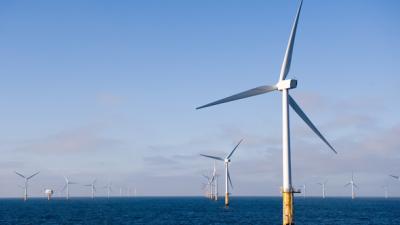
Egmond aan Zee Offshore Wind Farm (OWEZ), formerly named the Near Shore Windfarm (NSW), is the first offshore wind farm constructed off the Dutch North Sea and was considered a demonstration project to study the technical, ecological, economic, and social feasibility of offshore wind farms.
OWEZ consists of 36 turbines with a capacity of 3 MW each and was developed as part of the NoordzeeWind joint venture between Shell and Vattenfall. In March 2021, Shell acquired Vattenfall’s share and became the sole owner of the wind farm.
OWEZ was originally planned to operate until 2027. Following a Power Purchase Agreement (PPA) with Google, Shell NoordzeeWind received the necessary permits from the Dutch government to extend the wind farm’s operational life until 2031. This extension allows OWEZ to supply renewable power to the Dutch electricity grid for almost five years longer than initially planned.
Location
The wind farm is located 10-18 km off the coast of Egmond aan Zee, Netherlands in the Dutch North Sea. It lies within the Dutch Exclusive Economic Zone (EEZ), in water depths ranging from approximately 12 to 20 m and covers a total area of about 27 km2.
Project Timeline
- May 2025: Shell received a 5-year extension with corporate Power Purchase Agreement with Google
- March 2021: Shell fully acquired OWEZ from Vattenfall
- October 2007: Full commercial operation
- April 2007: Official inauguration
- December 2006: Construction completed
- June 2005: Construction began
- May 2005: Financial close reached and all contracts signed
- June 2002: Site selection and NoordzeeWind won the competitive tender
- September 1997: Feasibility study completed
Licensing Information
The licensing and permitting processes for OWEZ involved several key stakeholders and Dutch authorities. Rijkswaterstaat (within the Ministry of Infrastructure and Water Management) was responsible for managing the spatial planning and permitting of OWEZ, ensuring the project complied with marine safety, environmental, and water management regulations. Continuon, the local grid operator, arranged the grid connection and managed permits for cable installation and integration into the national electricity network.
Key Environmental Issues
OWEZ was part of a demonstration project aimed at assessing both the technological and environmental challenges of offshore wind development. A Monitoring and Evaluation Program (NSW-MEP) was designed to gather data on the ecological, technical, economic, and social effects of the wind farm from 2006 to 2012. Studies were conducted to evaluate impacts on flying birds, including on their flight paths, altitudes, and flux, as well as the effects on seabirds and non-marine migrating birds. Additional studies focused on impacts on harbour porpoises, using static acoustic monitoring before and after the construction of the wind farm. During construction, Horizontal Directional Drilling (HDD) was used for cable landfall beneath sensitive coastal dunes. As a relatively new technique at the time, HDD helped minimize environmental disturbance compared to traditional methods and is now standard practice in offshore wind projects in the region.
The Monitoring and Research Programme 2017-2021 (Wozep 2016) describes the overall monitoring and research programme for the Dutch Offshore Wind Ecological Programme (Wozep).
Environmental Papers and Reports
- Effects of wind farms on the spatial distribution of Guillemots (Zuur 2018)
- Offshore wind energy ecological programme (Wozep) Monitoring and research programme 2017-2021 (WOZEP project team 2016)
- Monitoring Bat Activity at the Dutch EEZ in 2014 (Lagerveld et al. 2015)
- Occurrence of peaks in songbird migration at rotor heights of offshore wind farms in the southern North Sea (Krijgsveld et al. 2015)
- Effect of pile-driving sound on the survival of fish larvae (Bolle et al. 2014)
- Effects of a 5-year trawling ban on the local benthic community in a wind farm in the Dutch coastal zone (Bergman et al. 2014)
- Underwater acoustic noise characteristics of the OWEZ wind farm operation (T1) (de Haan et al. 2014)
- Aanvullende analyse van de dataset van de boxcore bemonstering van 2011 binnen het OWEZ windpark en in de 6 referentiegebieden met relevante co-variabelen (Meesters 2014)
- Bats in Dutch Offshore Wind Farms in Autumn 2012 (Lagerveld et al. 2014)
- Responses of Local Birds to the Offshore Wind Farms PAWP and OWEZ off the Dutch mainland coast (Leopold et al. 2013)
- Pilot study Bat activity in the dutch offshore wind farm OWEZ and PAWP (Poerink et al. 2013)
- Monitoring and Evaluation Program Near Shore Wind Farm: Fish Community (van Hal et al. 2012)
- Impact of OWEZ wind farm on the local macrobenthos community (Bergman et al. 2012)
- The Development of Benthic Communities on Hard Substrates within OWEZ, the First Dutch Offshore Wind Farm (Noordzee Wind 2012)
- A methodological update of the Framework for the Appropriate Assessment of the ecological effects of Offshore Windfarms at the Dutch Continental Shelf (Boon et al. 2012)
- Effects on birds of Offshore Wind farm Egmond aan Zee (OWEZ): An overview and integration of insights obtained (Hartman et al. 2012)
- TNO review of IMARES report ‘Assessment of the Effects of the Offshore Wind Farm Egmond aan Zee (OWEZ) for Harbour Porpoise (comparison T0 and T1)’ (Blacquière et al. 2012)
- Flight patterns of birds at offshore gas platform K14: Flight intensity, flight altitudes and species composition in comparison to OWEZ (Fijn et al. 2012)
- Benthic Communities on Hard Substrates of the Offshore Wind Farm Egmond aan Zee (OWEZ) (Bouma and Lengkeek 2012)
- Habitat Preferences of Harbour Seals in the Dutch Coastal Area: Analysis and Estimate of Effects of Offshore Wind Farms (Brasseur et al. 2012)
- Effect Studies Offshore Wind Egmond aan Zee: Cumulative Effects on Seabirds - A Modelling Approach to Estimate Effects on Population Levels in Seabirds (Poot et al. 2011)
- Effect Studies Offshore Wind Farm Egmond aan Zee - Final Report on Fluxes, Flight Altitudes and Behaviour of Flying Birds (Krijgsveld et al. 2011)
- Short-Term Ecological Effects of an Offshore Wind Farm in the Dutch Coastal Zone: A Compilation (Lindeboom et al. 2011)
- Local Birds in and around the Offshore Wind Farm Egmond aan Zee (OWEZ) (Leopold et al. 2011)
- Residence Time and Behaviour of Sole and Cod in the Offshore Wind Farm Egmond aan Zee (Winter et al. 2010)
- Impact of OWEZ Wind farm on bivalve recruitment final report (Bergman et al. 2010)
- Effect studies Offshore Wind Farm Egmond aan Zee: Progress report on fluxes and behaviour of flying birds covering 2007 & 2008 (Krijgsveld et al. 2010)
- Monitoring and Researching Ecological Effects of Dutch Offshore Wind Farms (Boon et al. 2010)
- Local Birds in and around the Offshore Wind Park Egmond aan Zee (OWEZ) (T-0 & T-1) (Leopold et al. 2010)
- Survey of marine fouling on turbine support structures of the Offshore Windfarm Egmond aan Zee (2007-2009) (Bruijs 2010)
- Development of Underwater Flora and Fauna Communities on Hard Substrates of the Offshore Wind Farm Egmond aan Zee (Lengkeek and Bouma 2009)
- Refugium Effects of the MEP-NSW Windpark on Fish: Progress Report 2007 (HilleRisLambers and ter Hofstede 2009)
- OWEZ pelagic fish, progress report and progression after T1 (Ybema et al. 2009)
- Assessment of the Effects of the Offshore Wind Farm Egmond aan Zee (OWEZ) for Harbour Porpoise (comparison T0 and T1) (Scheidat et al. 2009)
- Did the Pile Driving during the Construction of the Offshore Wind Farm Egmond aan Zee, the Netherlands, Impact Local Seabirds? (Leopold and Camphuysen 2009)
- Operations Report 2007 (Noordzeewind 2008)
- Effect Studies Offshore Wind Farm Egmond aan Zee: Progress Report on Fluxes and Behaviour of Flying Birds (Krijgsveld et al. 2008)
- Harbour seals, Phoca vitulina, in relation to the wind farm site OWEZ, in the Netherlands: Interim report (Brasseur et al. 2008)
- Interim Report Benthos Recruitment T1 (Bergman et al. 2008)
- Local Birds in and around the Offshore Wind Park Egmond aan Zee (OWEZ)(T1) (Leopold and Camphuysen 2008)
- Offshore Windfarm Egmond aan Zee General report (NoordzeeWind CV 2008)
- Did the Pile Driving during the Construction of the Offshore Wind Farm Egmond aan Zee, the Netherlands, Impact Porpoises? (Leopold and Camphuysen 2008)
- Offshore wind farm Egmond aan Zee benthos densities progress report (Daan and Mulder 2008)
- General overview NSW-MEP Environment (Noordzeewind 2007)
- Underwater sound emissions and effects of the pile driving of the OWEZ windfarm facility near Egmond aan Zee (Tconstruct) (Haan et al. 2007)
- Background noise measurements for MEP-NSW Baseline T0 (de Haan et al. 2007)
- Baseline data on harbour seals, Phoca vitulina, in relation to the intended wind farm site OWEZ, in the Netherlands (Brasseur et al. 2006)
- Pre-survey of marine fouling on turbine support structures of the Offshore Windfarm Egmond aan Zee (Bruijs 2006)
- Impact of Windfarm OWEZ on the Local Macrobenthos Community (Daan et al. 2006)
- Baseline Studies North Sea Wind Farms: Fluxes, Flight Paths and Altitudes of Flying Birds 2003-2004 (Krijgsveld et al. 2005)
- Baseline studies wind farm for demersal fish (Tien et al. 2004)
- Base Line Studies North Sea Wind Farms: Final Report Pelagic Fish (Grift et al. 2004)
- North Sea Wind Farms NSW Lot 1 Benthic Fauna (Jarvis et al. 2004)
- Baseline Studies North Sea Wind Farms: Lot 5 Marine Birds in and Around the Future Sites Nearshore Windfarm (NSW) and Q7 (Leopold et al. 2004)
- Baseline data on the harbour porpoise, Phocoena phocoena, in relation to the intended wind farm site NSW, in the Netherlands (Brasseur et al. 2004)
Environmental Monitoring: Egmond aan Zee Offshore Wind Farm (OWEZ)
| Phase | Stressor & Receptor | Design and Methods | Results | Publications | Data |
|---|---|---|---|---|---|
| Baseline | Fish | Beam trawl survey A six-meter beam trawl with tickler chains was used to sample in the planned location of Near Shore Wind Farm (now OWEZ), as well as three reference areas, in June/July 2003 and January 2004. | Complete In the beam trawl surveys, a total of 41 species were observed along the Dutch coast and most species were found in every season investigated. | Tien et al. 2004 | No data publicly available |
| Baseline | Habitat Change Fish |
BACI demersal fish survey Beam trawls were used to take demersal samples from control areas outside of the wind farm and within the wind farm. The surveys were completed in both summer and winter of 2003/2004, 2007/2008, and 2011 before the wind farm and after construction and operation of the wind farm. The catch from the surveys are sorted, measured, counted, and stomach contents analyzed. | Complete Overall the presence of the wind farm seems to have limited, if any effect, on the fish community of the Dutch coastal zone. For some species local benefits due to a combination of the creation of new hard substrate habitats and exclusion of fisheries might have occurred. | van Hal et al. 2012 | No data publicly available |
| Baseline, Construction, Operations | Attraction, Avoidance, Noise Birds |
Vessel based seabird survey Seabirds were surveyed around pre-set survey lines both within the wind farm and in the areas surrounding the farm. These surveys were conducted over four years, one year before construction (2002 to 2004) and three years' post-construction (2007 to 2010). Surveys were conducted from a vessel along transect lines and seabirds were counted. Models were created to look at patterns in bird distribution. | Complete Diving seabirds were observed primarily in the coastal areas surrounding the wind farm after construction, however before construction, diving seabirds were observed all throughout the survey area. | Leopold and Camphuysen 2009, Leopold et al. 2004, Leopold et al. 2011 | No data publicly available |
| Baseline, Operations | Habitat Change Invertebrates, Physical Environment |
Box core and dredge sampling The study used a two-tiered sampling approach, combining box core and dredge sampling to capture a range of benthic organisms. Sampling was conducted across the wind farm area, safety zone, and nearby reference sites. | Complete Across all studies, sediments were predominantly sandy with low organic content, and benthic communities showed patchy distributions with greater species richness and abundance in the northern reference area. Faunal composition was highly similar inside and outside the OWEZ wind farm, with no significant differences in biomass, abundance, or density between sites, indicating no detectable short-term effects of wind farm construction on benthic communities. | Jarvis et al. 2004, Daan et al. 2006, Bergman et al. 2012 | No data publicly available |
| Operations, Construction | Habitat Change Marine Mammals |
Telemetry and aerial surveys Harbor seals were counted during aerial surveys at low tide. 12 seals were tagged with satellite tags before the wind farm was built in 2005 and 6 were tagged after the wind farm was built in 2007. | Complete During construction, seal presence was more restricted prior to construction. Only one seal approached the area during construction. Once the wind farm was operational, seals began using the area again, but their direction changed, and they started to swim around the wind farm as opposed to swimming between the wind farm and the mainland. | Brasseur et al. 2012 | No data publicly available |
| Operations | Attraction, Noise Bats |
Ultrasonic bat recording survey Ultrasonic bat recording surveys were conducted at two offshore wind farms: Offshore Wind Farm Egmond aan Zee (OWEZ) and Princess Amalia Windpark (PAWP), in 2012 (August–October) and 2014 (March–October). Ultrasonic recorders were mounted on monitoring platforms and meteorological masts to automatically detect bat calls within 15–50 m. Sound files were analyzed manually to identify species based on species-specific calls. | Complete Bat activity was consistently observed at OWEZ and PAWP, with multiple species detected across years. Activity was dominated by Nathusius’ pipistrelle and Nyctalus noctule, occurring mainly at night and under low wind conditions. Overall, bat presence was greatest in autumn, particularly in early September, with similar seasonal and spatial patterns across sites. | Lagerveld et al. 2015, Poerink et al. 2013 | No data publicly available |
| Operations | Collision Birds |
Radar and visual survey Horizontal and vertical radar observations were used to measure flight paths, fluxes, and altitudes. Visual and auditory observation was carried out at the wind farm once a month to determine flight patterns. | Complete The most numerous birds tracked by vertical radar were gulls and passerines. In the OWEZ wind farm highly variable mean traffic rates were found during all three years of field study, but on average in general between 30 and 230 bird groups per km per hour passed the wind farm. | Krijgsveld et al. 2011 | No data publicly available |
| Operations | Habitat Change Invertebrates |
Underwater video and sample collection using divers Sampling was done in 2008 and 2011. Handheld cameras were used by divers to take video footage of the entire depth range of the monopiles. Samples of organisms were collected at different depths by divers using a small knife and a net. Sample collection in the intertidal zone was completed from a boat. | Complete 23 new species were found on the monopiles in 2011 that were not found in 2008. Only three were found in 2008 that were not observed in 2011. | Bouma and Lengkeek 2012 | No data publicly available |
| Operations | Habitat Change Marine Mammals |
Acoustic monitoring and visual survey Harbor porpoise activity was measured continuously with T-PODs to detect echolocation, and visual surveys were also carried out on a bi-monthly basis. Sampling occurred before the offshore wind farm was constructed in 2003 and again after construction in 2007. | Complete There was a general increase in porpoise occurrence from before to after the wind farm was built. In the baseline study, the spatial distribution did not differ significantly between the impact and the reference areas. However, after the wind farm was built, there were significant changes in porpoise distributions, with a higher number of porpoises within the wind farm than outside. | Scheidat et al. 2009 | No data publicly available |