



Tidal
Gravity from the moon and sun cause water in the ocean to bulge in a cyclical pattern as the Earth rotates, causing water to rise and fall relative to the land in what are known as tides. Land constrictions such as straits or inlets can create high velocities at specific sites, which can be captured with the use of devices such as turbines. As seawater is about 800 times denser than air, tidal turbines can collect energy with slower water currents and smaller turbines than wind energy. Modern tidal power generating turbines operate on the same principles as wind turbines. While the moving water passes the turbine’s blades, the kinetic energy of moving water is converted into mechanical energy as the rotating blades spin a drive shaft. The mechanical energy in the drive shaft is then converted to electrical energy using a generator, often through a gearbox. Power may also be produced by extracting potential energy from the rise and fall of the tides in a manner similar to conventional hydropower.
 |
Axial Flow Turbine
Photo Credit: BALAO-SABELLA |
|
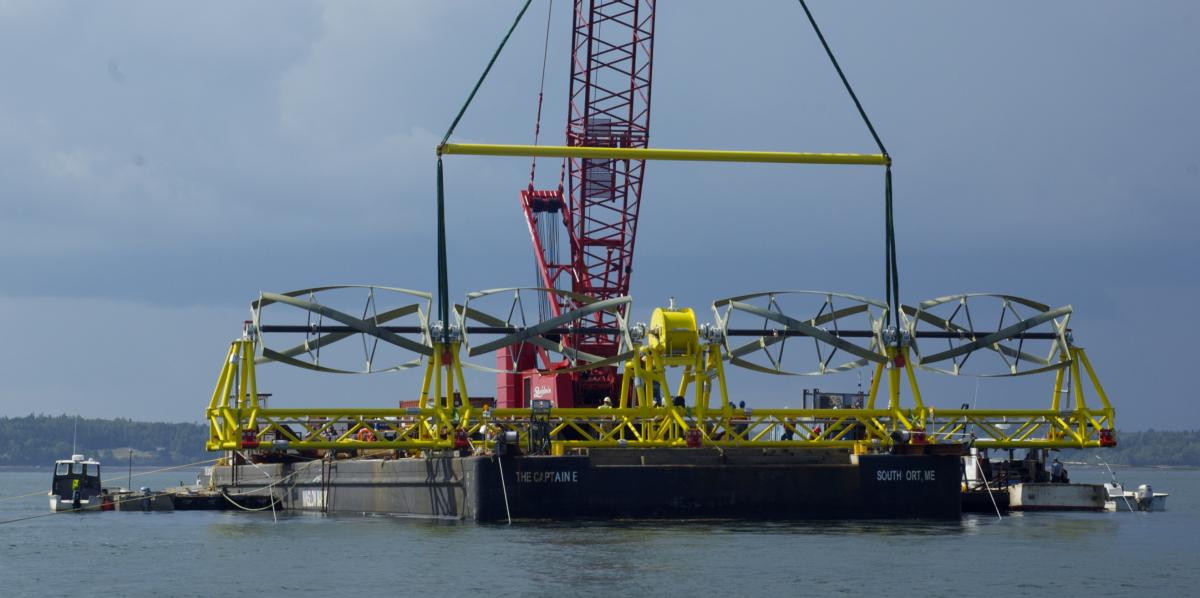
Cross Flow Turbine
Photo Credit: Ocean Renewable Power Company (ORPC) |
 |
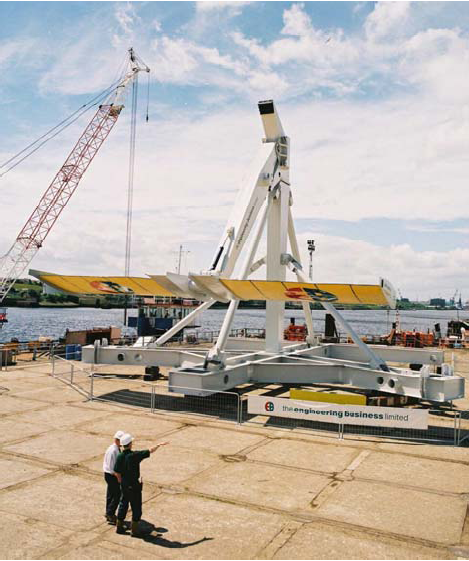 |
Reciprocating Device
|
|
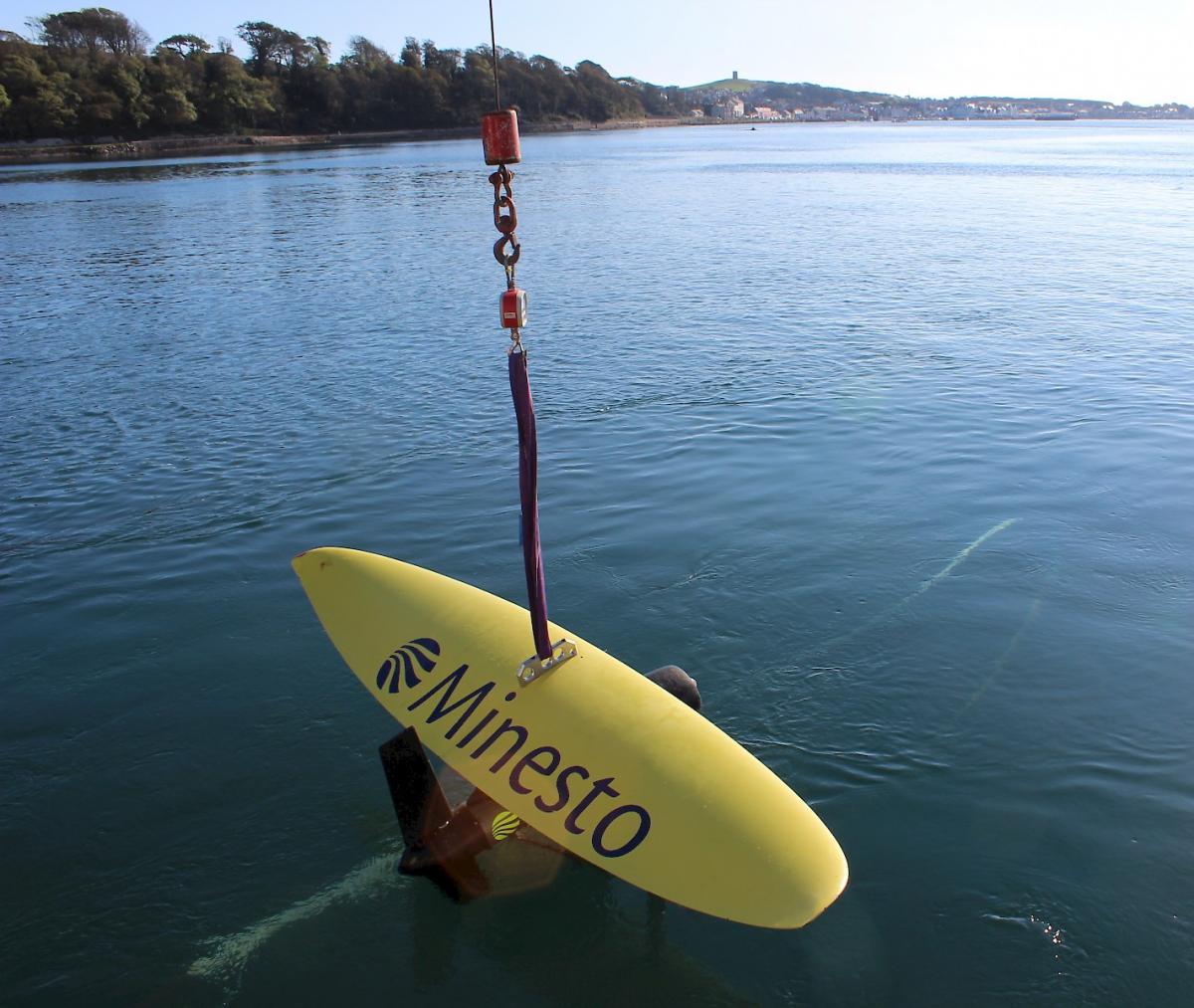
Tidal Kite
|
 |
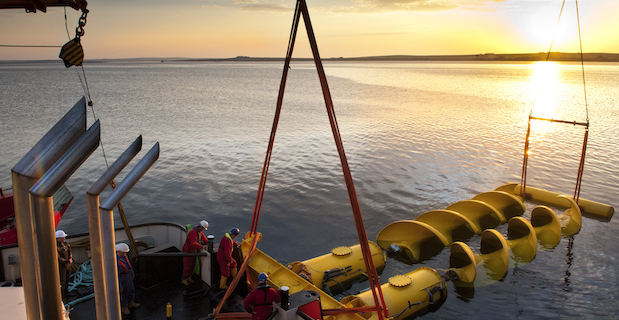 |
Archimedes' Screw
|
|
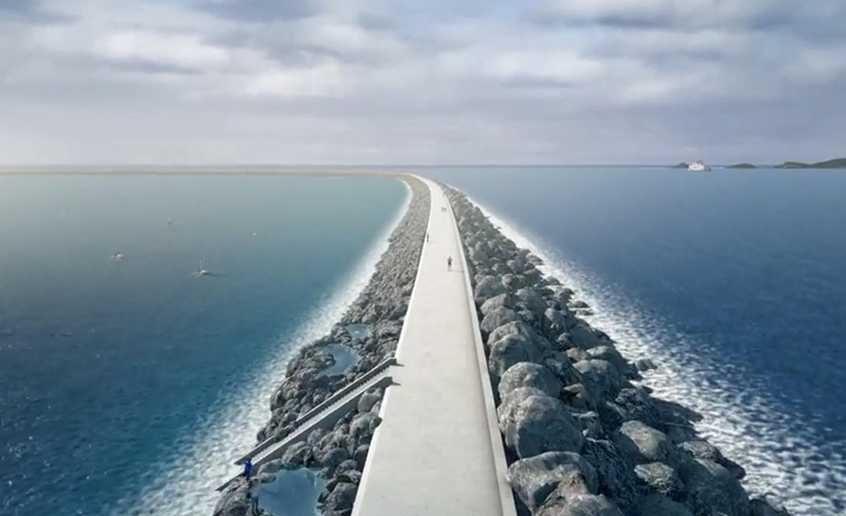
Tidal Lagoon
|
 |
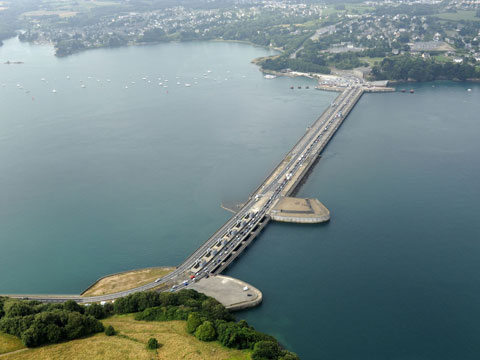 |
Tidal Barrage
|
Marine and Wind Energy Environmental Documents
Tethys is a knowledge hub that contains documents on the environmental effects of wind and marine energy. The table below contains all of the documents in the Tethys Knowledge Base associated with Tidal.
Total: 1322