



Contents
Wind Project Site
(login for email address)
Details
Description
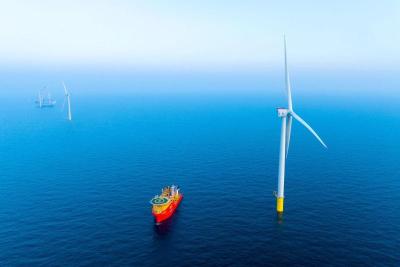
Dogger Bank Wind Farm is a joint venture between SSE Renewables (40%), Equinor (40%), and Vårgrønn (20%). SSE Renewables is leading on the development and construction and Equinor will operate the wind farm on completion and during its expected operational life of around 35 years. Dogger Bank Wind Farm is being constructed in 3 phases (Dogger Bank A, B, C) and will be capable of powering up to six million homes annually. Dogger Bank A and B phases will connect to the national grid near Beverley in East Riding of Yorkshire, while Dogger Bank C will connect to the grid near Redcar in the Tees Valley.
Dogger Bank D is a proposed fourth phase being developed by a 50/50 joint venture between SSE Renewables and Equinor. The proposed Dogger Bank D would be located in the eastern zone of the Dogger Bank C lease area, maximising the capacity of the existing acreage. The proposed development would be located around 210km off the north-east coast of England and cover an area of 262 km². The first phase of consultation on Dogger Bank D has now closed (26 September to 7 November 2023). As a Nationally Significant Infrastructure Project (NSIP), it will require a new Development Consent Order to facilitate the development, construction, and operation of the proposed project.
As of October 2023, Dogger Bank A was connected via a high-voltage direct current (HVDC) transmission system to Britain’s national grid and is currently providing renewable power to homes and businesses, marking the first-time use of HVDC technology on a UK wind farm. First power followed the installation of the first of GE Vernova’s ground-breaking Haliade-X 13 MW turbines, one of the largest and most powerful globally, at the Dogger Bank site. This is the first time the 13 MW Haliade-X units have been energised offshore anywhere in the world. In another first, Dogger Bank is also using Jan de Nul’s Voltaire, the largest offshore jack-up installation vessel ever built and the first ultra-low emission ship of its kind.
Location
The Dogger Bank Offshore Development Zone, located between 125 and 290 km off the east coast of Yorkshire, extends over approximately 8660 km² and water depths range from 18 to 63 m. Its grid connection point will be north of the A1079 between Beverley and Cottingham in the East Riding of Yorkshire. The cable route will then connect to the National Grid at the existing substation at Creyke Beck and Lackenby. The installation base port is Seaton and the operations and maintenance port is Tyne.
Project Timeline
- July 2026: All wind turbine generators and inter-array cables have now been installed on Dogger Bank A. Efforts now surround commissioning and maintenance operations. For Dogger Bank B, all monopile / transition pieces have been installed, and inter-array cables have been laid, buried and terminated. For Dogger Bank C all monopile / transition pieces have been installed.
- Late 2025: Expected completion of Dogger Bank A
- July 2024: Inter-array cable works completed on Dogger Bank A
- May 2024: Foundation installation campaign began on Dogger Bank B
- April 2024: Offshore substation platform installed at Dogger Bank D
- October 2023: Dogger Bank A produces power for first time
- August 2023: Turbine installation commenced
- April 2023: Installation of the world’s first unmanned HVDC offshore platform
- March 2023: Official opening of the long-term operations and maintenance base at Port of Tyne
- July 2022: Installation of the first monopile turbine foundations at Dogger Bank A
- March 2022: Offshore construction began
- December 2021: Financial close on Dogger Bank C
- November 2021: Construction start of net zero carbon Operations and Maintenance (O&M) Base at the Port of Tyne
- July 2021: Start of site preparation Work for Dogger Bank C
- January 2020: Onshore construction began
Licensing Information
- April 2025: Application to amend DCO for Dogger Bank A and B, enabling separate OFTO processes; stakeholder consultation opened
- March 2024: Dogger Bank B European Protected Species Licence
- August 2023: European Protected Species Licence for Dogger Bank A Generation Site
- April 2023: Dogger Bank C UXO Investigation Campaign
- February 2023: Marine Licence for the UXO Clearance at Dogger Bank B Array Site
- March 2022: Marine Licence for the UXO Investigation Campaign for Dogger Bank A and B Array Site (excluding OSP)
- July 2021: Marine Licence for Dogger Bank A and Dogger Bank B Export Cable and Offshore Platform UXO Clearance
- April 2021: Nearshore UXO European Protected Species Licence for Dogger Bank A and Dogger Bank B
- April 2021: Nearshore UXO Marine Licence for Dogger Bank A and Dogger Bank B
- August 2015: Development Consent Order (as amended) for Dogger Bank C as made by the Secretary of State for Energy and Climate Change
- Marine Management Organisation (MMO) Deemed Marine Licenses contained within Schedules 8 and 10
- January 2023: Marine Management Organisation (MMO) Deemed Marine Licenses contained within Schedules 10 and 11
- February 2015: Development Consent Order (as amended) for Dogger Bank A and B as made by the Secretary of State for Energy and Climate Change
- Marine Management Organisation (MMO) Deemed Marine Licenses contained within Schedules 8, 9, 10, and 11
- March 2014: Environmental Impact Statement Approved
Key Environmental Issues
The Environmental Impact Assessment predicted negligible to minor adverse (i.e. non-significant) residual impacts for the vast majority of impacts that were identified in relation to the offshore assessment for the Dogger Bank Project. The potential for moderate adverse residual impacts (identified as significant in line with the assessment methodology) was identified in relation to marine and coastal ornithology, commercial fisheries, and seascape and visual character.
- Marine Physical Processes - Significant effects on waves and tidal currents were not anticipated. An increase in suspended sediment concentration and sediment deposition will be temporary. There will be no effect on sediment transport from linear cable protection.
- Marine Water and Sediment Quality - Impacts during all phases, including an increase in suspended sediments and the potential re-suspension of contaminants, will be temporary and of low magnitude, leading to no significant residual impacts. The potential for pollution from the accidental spillage of chemicals, fuels or oil during the development was also considered and identified as low risk. Control measures will be in place to minimise the risk of a spill.
- Marine and Coastal Ornithology - During construction (and decommissioning), the key impacts are disturbance and displacement. These are predominantly short-term and reversible impacts, which are not considered to be significant. During operation key impacts include: disturbance and displacement; barrier effect on breeding seabird and migratory wintering or passage bird populations; and collision risk. However, these are also not predicted to be significant for Dogger Bank Creyke Beck. Some impacts do become significant when considered cumulatively with other projects. Mitigation measures to reduce and minimise these impacts include: the western edge of Dogger Bank Creyke Beck B was moved to the east, away from the high-density seabird feeding area associated with sandeel; a reduction in the maximum number of turbines per project from 300 to 200 (since the EIA this has been reduced further); and an associated increase in the minimum lower blade tip height (from 22m to 26m) above highest astronomical tide.
- Marine and Intertidal Ecology - Temporary disturbance of existing habitats and increases in suspended sediment levels was predicted to occur during the construction phase, with some permanent loss of habitat where infrastructure is fixed in place during operation. Impacts were not considered to be significant, since the areas of existing habitats that may be affected represent only a small proportion of similar seabed habitats in the wider region, and are generally of low sensitivity and high recoverability. Potential impacts on an area of Mytilus habitat identified in the nearshore section of the export cable corridor (if confirmed during pre-construction surveys) will be avoided through micro-siting of the export cables.
- Fish and Shellfish Ecology - Fish and shellfish were predicted to be affected through temporary disturbance during construction, and permanent loss of habitat during operation. Potential impacts relating to noise and electromagnetic fields were been assessed. No significant residual impacts were identified for fish and shellfish ecology. The adoption of soft start piling will allow fish to move away from the noise source, whilst the western boundary of the development was modified in order to reduce the loss of habitat for the commercially important sandeel.
- Marine Mammals - The key impacts for marine mammals are the potential for hearing injury and/or behavioural disturbance (such as displacement from a feeding area) during construction. The risk of causing hearing injury is mitigated through the use of a Marine Mammal Mitigation Protocol, which will aim to reduce the exposure of marine mammals to sources of noise. Behavioural disturbance impacts were not assessed as being significant for Dogger Bank.
During construction of the wind farm, Dogger Bank aims to increase and expand STEM (Science, Technology, Engineering, and Maths) provision in local communities with bespoke programmes in each key area (East Riding of Yorkshire, South Tyneside, Redcar and Cleveland). Focus will be on the coastal communities nearest to the wind farm construction and operational bases.