



Webinar
Event Access
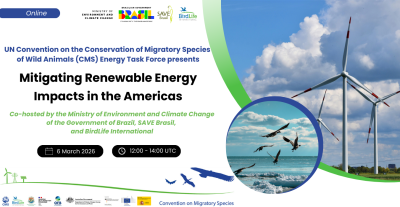
Renewable energy has become the dominant source of new power capacity additions worldwide, reflecting declining technology costs, improved performance, and stronger climate and energy-security policies. Within this global context, the Americas represent a heterogeneous landscape: North America is characterized by large-scale deployment, South America stands out for the high share of renewables in the power mix, and Central America & the Caribbean consist of smaller systems with significant untapped potential but tighter financial and institutional constraints.
The region, especially South America, is entering a period of substantial energy system transformation. According to the Regional Energy Transition Outlook for South America by the International Renewable Energy Agency (IRENA), renewable capacity in South America could rise dramatically in the coming decades, driven by solar, wind, and hydropower deployment. Under ambitious decarbonisation scenarios, total renewable installed capacity could grow from around 312 GW in 2024 to more than 1690 GW by 2050, with variable renewables (wind and solar) representing an increasing share of the mix. By mid-century, renewables have the potential to supply over 98% of the region’s electricity, transforming South America into a clean, electrified energy powerhouse. Long-term outlooks indicate that South America could approach a near-fully renewable power system by mid-century under accelerated transition scenarios, contingent on grid reinforcement, flexibility resources, and sustained investment.
North America hosts the largest absolute volume of renewable energy capacity in the hemisphere, featuring some of the world’s richest wind, solar, geothermal, hydro and biomass resources. The continent relies on renewable energy for large-scale power generation, particularly hydropower.3 The United States dominates regional additions, driven primarily by utility-scale solar PV, onshore wind, and rapidly growing battery storage. Canada’s system continues to rely heavily on hydropower, while also expanding wind and solar. Looking ahead, North America is expected to maintain strong annual additions through 2030 and beyond, with renewables remaining central to new capacity pipelines.
Central America and the Caribbean are characterized by smaller, often isolated power systems. Mexico, like its northern neighbours, relies heavily on hydropower, but also has an abundance of sun and wind, and an active geological landscape the country is working to incorporate in its renewables portfolio. Growth in renewables is steady but more gradual, reflecting higher financing costs and grid constraints. Nevertheless, solar PV, wind, geothermal and modern biomass resources provide a strong basis for scaling up clean generation, especially when supported by concessional finance, robust auctions, and regional cooperation.
This rapid expansion of renewable energy across the Americas represents a critical component of the global response to climate change, in line with commitments under the Paris Agreement, yet it also presents growing challenges and opportunities for migratory species that traverse the region’s diverse ecosystems. As wind, solar, and associated infrastructure scale up across national borders, there is an urgent need for cross-sector dialogue that balances climate action with biodiversity conservation, in accordance with the Kunming-Montreal Global Biodiversity Framework (GBF) under the UN Convention on Biological Diversity (CBD) and the objectives of the CMS Samarkand Strategic Plan for Migratory Species (SPMS) 2024-2032.
However, if renewable energy infrastructure is not appropriately sited, designed, managed and operated, it can pose significant risks to migratory species that depend on the Americas’ interconnected flyways and migratory corridors. Wind energy, solar facilities, transmission lines, and associated infrastructure may result in collision risk, habitat loss and fragmentation, barrier effects, and cumulative impacts along migration routes. These risks are particularly relevant in the Americas, which host some of the world’s most important flyways, used by iconic species listed in the CMS Appendix I & II and vulnerable to cumulative impact along its migratory route, such as the Red Knot (Calidris canutus), Whooping Crane (Grus americana), Swainson’s Hawk (Buteo swainsoni), Golden Eagle (Aquila chrysaetos), Andean Flamingo (Phoenicoparrus andinus) and a range of migratory seabirds, bats and marine species. Addressing these challenges is essential to ensure that the rapid expansion of renewable energy supports both climate mitigation and the conservation of migratory species.
Convened by the CMS Energy Task Force (ETF), this webinar will explore renewable energy impacts and solutions in the Americas with a specific focus on Brazil, both as a key actor in the region’s renewable energy transition and as the host of CMS COP15. The session will highlight how ETF members and partners are designing, financing, and implementing renewable energy projects in ways that anticipate and mitigate impacts on migratory species.
The panel will bring together stakeholders from diverse sectors, including national and subnational government representatives from government, finance, industry and civil society, to share lessons learned and practical approaches that balance renewable energy expansion with biodiversity conservation. This webinar further contributes to the implementation of the Rio Conventions Synergies, promoting integrated approaches to climate mitigation, biodiversity conservation, and sustainable energy development.
The webinar aims to:
- Advance shared understanding of how the energy transition can support both climate and biodiversity objectives in the Americas while anticipating and mitigating impacts on migratory species,
- Strengthen regional dialogue and collaboration ahead of CMS COP15 in Brazil, and
- Showcase best practices and innovative tools like AVISTEP for managing renewable energy impacts on migratory species.