



Webinar
Event Access
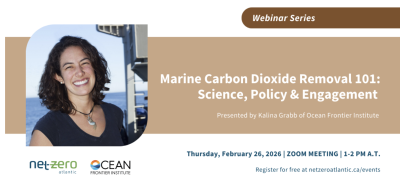
With increasing carbon dioxide emissions, in addition to cutting fossil fuel emissions, carbon dioxide removal techniques are likely necessary to meet climate goals, especially to remove legacy carbon dioxide in the atmosphere. Given the ocean’s natural ability to remove large amounts of carbon dioxide and durably store it for long periods of time, marine CDR (mCDR) techniques are gaining research interest.
This webinar will provide a high-level overview of the more commonly considered mCDR techniques across biotic and abiotic methods. It will also touch on governance considerations and emphasize the importance of community engagement, especially with Indigenous and fisheries communities.
Learning Objectives
- Introduce commonly considered mCDR techniques
- Provide an overview of key policy, governance, and engagement considerations
- Establish a baseline understanding of mCDR, including major areas of ongoing research
Why Attend?
Given that mCDR is naturally an interdisciplinary subject that is relevant across sectors, it is important for ocean-practitioners across sectors to be aware of the subject matter and learn about opportunities to engage with mCDR activities.
Who Should Attend?
- Ocean and climate researchers
- Policy makers and government agencies
- Environmental and marine practitioners across sectors
- Indigenous and coastal community members
- Fisheries and ocean-resource stakeholders
- Anyone seeking a foundational understanding of marine carbon dioxide removal
About the Presenter
Kalina Grabb, Postdoctoral Fellow, CONVERGE CDR Research Lead
Dalhousie University, Ocean Frontier Institute
Dr. Kalina Grabb is a chemical oceanographer who enjoys conducting science that is informed by policy and local community priorities, including fishing and Indigenous communities. She currently is a postdoctoral fellow at Dalhousie University in Halifax, Canada, where she is the Research Lead of Ocean Frontier Institute’s program CONVERGE CDR. Kalina’s research has spanned sensor development, nutrient cycling, reactive chemicals, and marine carbon dioxide removal (mCDR). Kalina completed her PhD in 2022 in chemical oceanography at MIT-Woods Hole Oceanographic Institution (WHOI) and since has worked across the science-policy interface at U.S. National Oceanic and Atmospheric Administration (NOAA) Ocean Acidification Program, WHOI Marine Policy Center, and NOAA Northeast Fisheries Science Center. Kalina grew up in the land-locked state of Colorado and in her free time, enjoys studying oceanographic phenomena through sailing, diving, kiting, and long swims on the beach.
Past Events
- NetZero Atlantic Webinar Series - Offshore Wind and Birds: Understanding risk to inform siting, Online, 7 December 2023 17:00-18:00 UTC