



Contents
Wind Project Site
(login for email address)
Details
Description
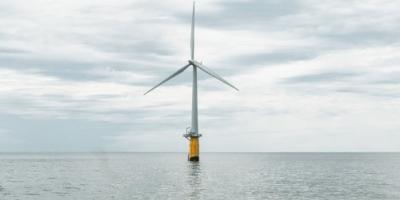
The Unitech Zefyros began its journey as Hywind Demo, the world’s first floating offshore wind turbine, installed by Equinor (formerly Statoil) in 2009 at the METCentre test site. This 2.3 MW turbine successfully demonstrated its ability to perform in all wind and wave conditions during eight years of operation off the Karmøy test location. The Hywind Demo project proved the viability of the floating wind turbine concept and ultimately led to the development of the world’s first commercial floating wind farm, Hywind Scotland.
In 2019, ownership of the turbine was transferred to Unitech Offshore, which renamed it Unitech Zefyros. Now operating under its own concession, Zefyros plays a key role in research and technology development as part of the Sustainable Energy Katapult and serves as infrastructure at the METCentre test site. Additionally, it supports power delivery to the local grid onshore, with TetraSpar feeding energy through Zefyros.
Location
The Unitech Zefyros is located in Norway, approximately 10 km (6.2 miles) offshore from Karmøy, as part of the METCentre test site for offshore wind turbines. This site is a critical hub for testing and developing new floating wind turbine technologies and is situated near deepwater quays and shipyards. The nearest ports are on the coast of Karmøy and in the nearby town of Haugesund.
Project Timeline
- November 2022: Zepfyros mounted a helicopter deck
- October 2021: Performance monitoring
- 2020: Consideration for electrolysis to produce hydrogen
- 2019: Unitech Offshore took ownership from Equinor and renamed Unitech Zeyphros
- May 2014: Performance monitoring
- December 2009: Turbine fully commissioned
- September 2009: Turbine connected to grid and generated power
- June 2009: Turbine installed
- November 2005: Consent application submitted
Licensing Information
In January 2005, the Norwegian Government granted consent authorization for the Hywind Demo project (now known as Unitech Zefyros). On 20 September 2022, METCentre was granted a license, by Norwegian authorities, to expand its testing capacity for floating energy production near Karmøy. The approval, valid for 25 years, allowed for the installation of up to seven turbines with the necessary cabling for power generation. The consenting process involved coordination with multiple regulatory agencies, including the Norwegian Water Resources and Energy Directorate (NVE), the Norwegian Directorate of Fisheries, and the Norwegian Environment Agency.
Key Environmental Issues
There are limited publicly available studies detailing ecological monitoring at Hywind Demo / Unitech Zefyros, however, an acoustic monitoring study was conducted, and an ocean buoy was deployed to collect data. Monitoring efforts mainly focused on the turbine’s operational performance and structural behavior.