



Contents
Wind Project Site
(login for email address)
Details
Description
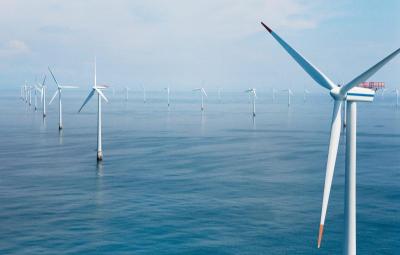
Horns Rev 1, built by Danish energy company Elsam (later DONG, now Ørsted), was the first large-scale offshore wind farm in the world. Today it is jointly owned by Vattenfall (60%) and Ørsted (40%). Its capacity of 160 MW was four times that of the previous largest, the Middelgrunden at 40 MW. Horns Rev 1 is the first phase of three wind farm projects, with Horns Rev 1 coming online in 2002, Horns Rev 2 in 2009, and Horns Rev 3 in 2019. Horns Rev 1 was the first offshore wind farm in the North Sea, the first to use the monopile foundation type, and the first to have its transformer on an adjacent platform rather than onshore. Horns Rev 1 was also the first offshore wind farm to use steel monopile foundations 18 km from the coastline, and the first to have its own designated offshore substation. Technologies used for the first time at Horns Rev 1 have since become industry standard. Ørsted has a long-standing R&D partnership program with universities and research institutions worldwide and has been sharing big data from its Horns Rev 1 with selected universities.
Location
The Horns Rev 1 wind farm is in the North Sea about 14 to 20 km offshore from the Danish coastline, specifically about 20km west off Blåvandshuk on the west coast of Jutland. The power generated passes to a transformer platform on the fringe of the offshore wind farm, where the voltage is transformed up to 150 kV before the electricity is taken to the shore through a 21-km submarine cable to Hvidbjerg Strand. The submarine cable, manufactured in Norway, is the first plastic-insulated 150 kV cable in the world. With a diameter of 19.2 cm, it is also the thickest submarine cable ever made. The Port of Esbjerg is the nearest port to Horns Rev 1.
Project Timeline
- 2005: Vattenfall acquired a 60% stake in the wind farm
- 11 Dec 2002: Horns Rev I was fully commissioned
- 29 Jul 2002: First turbine begins generating power
- 01 Mar 2002: Horns Rev I offshore construction starts
- 29 Mar 2001: Consent authorized
- 15 June 1999: Consent application submitted
Licensing Information
The Horns Rev I offshore wind farm project originated in February 1998 when the Danish Minister of Environment and Energy ordered its establishment. By March 29, 2001, the project received final approval from the Danish Energy Agency, marking a significant milestone in its regulatory development.
Key Environmental Issues
Between 1999 and 2006, a comprehensive environmental monitoring programme was carried out to evaluate the environmental impact of the Horns Rev and the Nysted Offshore Wind Farms, two of the biggest farms in the world at the time. Between 1999 and 2001, as part of the Environmental Impact Assessments (EIAs) and as the basis for the environmental monitoring programme, baseline studies were undertaken to establish a reference for later analysis (Danish Energy Agency).
The studies and analyses in the environmental monitoring programme dealt with:
- Benthic fauna and vegetation: Studies of bottom fauna and vegetation, including the food basis for fish, with particular focus on the introduction of a hard bottom habitats, e.g. the turbine foundation and scour protection.
- Fish: Studies of the distribution of fish around the wind turbines and the scour protection and the impact of electromagnetic fields on fish.
- Marine mammals: Studies of the behaviour of harbour porpoises and seals in and near the wind farm areas.
- Birds: Studies of resting, foraging and moulting birds, including modelling of collision risks and monitoring of bird collisions with wind turbines.
- Attitudes: Sociological and environmental economic studies of people’s attitudes towards the wind farms.
As a follow-up to the environmental monitoring programme, a new programme ran from 2009- 2012 that focused on fish, harbour porpoises, birds and various cumulative effects. The final results of this follow-up can be found in Danish Energy Agency (2013). Additional information can be found here.
Environmental Papers and Reports
- Changes in the distribution and abundance of common scoter and diver species in the Horns Rev I, II and III offshore windfarm areas, Denmark, 2025 Scott-Hayward et al. 2025
- Benthic Communities at Horns Rev Before, During and After Construction of Horns Rev Offshore Wind Farm: Final Report Vattenfall 2006
Environmental Monitoring: Horns Rev 1
| Phase | Stressor & Receptor | Design and Methods | Results | Publications | Data |
|---|---|---|---|---|---|
| Baseline | Habitat Change Birds, Physical Environment |
Regional Avian Distribution and Ecological Impact Assessment
This avian ecological study, conducted from April 1999 to May 2000 across the Horns Rev area spanning 1,700 km², utilized integrated aerial and ship-based survey techniques, including systematic transect counts and detailed distribution analysis. Researchers aimed to characterize bird population dynamics and potential interactions with offshore wind farm infrastructure. |
Complete
Results revealed a substantial regional bird population of 5-7 million individuals in Danish waters, with notably limited bird presence specifically within the wind farm area. The study identified potential habitat modifications and suggested possible disturbance or avoidance behavioral responses. Collision risk remained uncertain, highlighting the complex ecological interactions between marine avian populations and offshore renewable energy development. |
Noer et al. 2000 | No data publicly available. |
| Baseline | Changes in Flow, Habitat Change Fish, Invertebrates |
Benthic and Habitat Characterization Assessment
This ecological study conducted benthic sampling and habitat characterization at six wind turbine locations. Researchers employed Haps collectors to analyze sediment properties, including grain size and organic content, with strategic sampling stations positioned at 5m, 25m, and 100m intervals from structural foundations. Multi-mesh gillnet surveys (KFG-12) complemented the investigation, with systematic transect sampling and comparative analyses against reference areas. |
Complete
Results established baseline environmental conditions, revealing minimal anticipated hydrodynamic alterations. The preliminary habitat assessment identified the foundation areas as potential novel hard substrate ecosystems. |
Tech-Wise A/S 2002 | No data publicly available. |
| Baseline, Construction, Operations | Habitat Change Fish, Marine Mammals |
Benthic Ecological Impact Assessment
This comprehensive marine ecological study, conducted from 1999-2005, investigated benthic community responses to offshore wind farm infrastructure at the Horns Rev site, spanning 27.5 km². Using standardized HAPS core sampling methodology with three replicates per station, researchers performed detailed infauna analysis, sieving samples through a 1.0 mm mesh to comprehensively examine species composition, abundance, and biomass. Complementary sediment analyses assessed grain size and organic content, with statistical evaluation using Bray-Curtis similarity indices and ANOVA tests. |
Complete
Results demonstrated minimal ecological disruption, with habitat loss accounting for less than 0.1% of the bottom fauna area. Storm events were observed to limit fouling development on foundations, while sediment particle size increased marginally. Despite physical infrastructure introduction, no statistically significant changes were detected in the existing infauna community. Notably, the study documented 14 new epifaunal species colonizing the wind farm structures, with an estimated 50-fold increase in local food availability. |
Elsamprojekt 2000, Vattenfall 2006 | No data publicly available. |
| Baseline, Construction, Operations | Avoidance, Habitat Change Marine Mammals |
Marine Mammal Monitoring
Monitoring involved satellite telemetry, acoustic dataloggers (T-PODs), ship surveys, and population counting to track harbor porpoise and seal behavior and distribution. |
Complete
Marine mammal monitoring revealed minimal ecological disruption. Seals, while using the area as part of their foraging routes, spent less than 0.1% of time within the wind farm infrastructure and showed no significant long-term behavioral changes. Harbor porpoise populations demonstrated remarkable resilience, with no substantial abundance shifts during construction or operational phases. Short-term disturbances from pile driving were quickly mitigated, with acoustic activity returning to normal within 3-4 hours. Preliminary observations even suggested potential localized benefits, including possible increased porpoise presence within the wind farm area, indicating the marine mammals' adaptive capabilities in response to offshore renewable energy infrastructure. |
Dong Energy and Vattenfall 2006, Boesen and Kjær 2005 | No data publicly available. |
| Baseline, Construction, Operations | Habitat Change Physical Environment |
Hard Substrate Ecological Colonization
Researchers monitored the colonization of artificial hard substrates created by wind turbine foundations and scour protections between 2003-2005. The study documented species diversity, abundance, and community development through detailed observations and surveys. |
Complete
The study revealed significant ecological succession on introduced hard substrates. In 2003, 16 seaweed taxa and 65 invertebrate taxa were identified. By 2005, the total number of epifaunal species had gradually increased. Food availability estimated at 8x the original soft seabed in 2003 escalated to 150x by 2005. Notable colonizers included Jassa marmorata (reaching densities up to 994,775 ind./m²), Telmatogeton japonicus, and Sertularia cupressina. The structures demonstrated potential as nursery grounds for species like Cancer pagurus. |
Dong Energy and Vattenfall 2006, Boesen and Kjær 2005 | No data publicly available. |
| Baseline, Operations | Displacement, Habitat Change Birds |
Multi-phase aerial monitoring with spatial gradient analysis
Using a consistent aerial line-transect protocol, Aarhus University/DCE conducted pre- and post-construction surveys around HR I (operational from 2002) as part of a 2000–2025 time series. Bird densities of red-throated divers and common scoters were estimated with Distance Sampling and spatial models relating density to distance from the HR I footprint, compared across predefined phases (pre-construction Phase 1 and subsequent post-construction phases). |
Complete
HR I did not provide a robust platform for pre/post attribution due to large, long-term shifts in regional bird abundance and distribution. Red-throated divers increased from Phase 1 to Phase 2, then declined from Phase 2 to Phase 3 in line with an area-wide decline. Common scoters showed a sharp decline from Phase 1 to Phase 2, but this was consistent with broader redistribution and could not be linked to HR I construction. Overall, no clear, consistent displacement attributable to HR I was demonstrated. |
Scott-Hayward et al. 2026 | No data publicly available. |
| Baseline, Operations | Avoidance, Collision Birds |
Avian Monitoring
Comprehensive monitoring included aerial surveys, visual and radar observations, spatial distribution analysis using Jacobs' selectivity index, and collision risk assessments. |
Complete
Avian monitoring revealed highly species-specific behavioral responses. Divers, gannets, and common scoters demonstrated increased avoidance of the wind farm area, while herring gulls, little gulls, and terns showed an unexpected preference for the infrastructure. Radar tracking indicated that 71-86% of bird flocks successfully avoided entering the wind farm, with no actual collisions observed during the study period. However, nighttime migration patterns suggested reduced avoidance capabilities in low-visibility conditions. Despite these varied responses, researchers concluded there was no indication of a substantial increase in annual bird mortality. |
Dong Energy and Vattenfall 2006, Boesen and Kjær 2005 | No data publicly available. |
| Baseline, Operations | Habitat Change Human Dimensions, Navigation |
Sediment and Benthic Community Monitoring
Researchers conducted systematic sediment sampling and benthic community assessments at the Horns Rev wind farm and reference areas. Sampling stations were consistently located to track changes in sediment characteristics and marine ecosystem dynamics over time. |
Complete
Sediment particle size showed gradual changes, increasing from 370 μm in 1999 to 515 μm in 2003 in the wind farm area. The variations occurred both inside and outside the wind farm, suggesting natural environmental fluctuations rather than direct wind farm impacts. Benthic community structure remained relatively stable, with some population shifts including declines in Pisione remota and Spisula solida, and increases in Goodallia triangularis. New species were introduced, potentially influenced by changes in sediment characteristics and the introduction of hard substrate habitats. |
Dong Energy and Vattenfall 2006, Boesen and Kjær 2005 | No data publicly available. |
| Baseline, Operations | Habitat Change Marine Mammals |
Fish Monitoring
Researchers employed multiple techniques including hydroacoustic surveys, transect sampling, and visual observations to assess fish population dynamics in and around the wind farm area. |
Complete
A total of 22 fish species were registered since wind turbine installation. Initial observations showed limited fish presence, but subsequent monitoring revealed increasing fish populations. Acoustic surveys detected no significant regional effects on fish communities. Sandeel populations showed a 300% density increase in the impact area from 2002 to 2004, with no negative impacts observed. Food availability near turbine foundations increased substantially, potentially attracting fish species. |
Dong Energy and Vattenfall 2006, Boesen and Kjær 2005 | No data publicly available. |
| Baseline, Operations | Avoidance, EMF, Noise Marine Mammals |
Marine Mammal Habitat Use and Interaction Assessment
This ecological study conducted baseline surveys and impact assessments at the Horns Rev wind farm site, focusing on harbor porpoise distribution and behavioral responses to offshore infrastructure. Researchers systematically monitored marine mammal populations before and after construction to evaluate potential ecological interactions and habitat use patterns in the wind farm area and adjacent reference locations. |
Complete
Results revealed a concentrated harbor porpoise density between the wind farm and the shoreline, suggesting critical habitat utilization in this zone. Preliminary evidence indicated a potential breeding area located west of the wind farm infrastructure. The study anticipated local avoidance behaviors by porpoises in response to the introduced structures, highlighting the potential ecological displacement effects of offshore renewable energy development. |
Elsamprojekt 2000 | No data publicly available. |
| Construction | Avoidance, Displacement, Noise Birds, Marine Mammals |
Marine Ecological Distribution and Habitat Use Assessment
This multidisciplinary ecological study conducted aerial surveys across a 1,700 km² marine region from August 2000 to January 2002. The study utilized Jacobs' selectivity index for bird distribution analysis, deployed stationary acoustic T-PODs, conducted hydrographic monitoring using CTD stations, and performed 15 transect line surveys with multiple reference area comparisons. |
Complete
Results mapped spatial and temporal variations in bird and harbor porpoise distributions, revealing complex ecological interactions. Acoustic data demonstrated correlations between click frequencies and prevailing weather and hydrographic conditions. The preliminary assessment suggested potential disturbance effects on marine species, with notable identification of seasonal variations in species movement patterns. |
Tech-Wise A/S 2002 | No data publicly available. |
| Construction, Operations | Habitat Change Ecosystem Processes, Invertebrates |
Benthic Ecological Impact Assessment
This ecological study conducted at the Horns Rev offshore wind farm site examined benthic fauna characteristics across the wind farm infrastructure, cable line routes, and reference areas. Researchers focused on detailed assessments of sediment composition, species diversity, and biomass distribution to evaluate potential environmental impacts. |
Complete
Results indicated minimal ecological disruption, with only 0.1% of the seabed area reclaimed during infrastructure development. The potential benthic biomass impact was estimated at approximately 600 kg, accompanied by a projected annual copper discharge of 206 kg. Notably, the study suggested a potential artificial reef effect, with infrastructure potentially facilitating ecological colonization. |
Leonhard 2000 | No data publicly available. |
| Construction, Operations | Habitat Change Invertebrates, Physical Environment |
Marine Water Quality Monitoring & Modeling
This comprehensive environmental monitoring study, conducted from 1990-1998, examined coastal marine water quality dynamics at three sentinel stations, with West Blavand serving as the primary site. Utilizing monthly measurements and advanced hydrodynamic modeling techniques from the Danish Hydraulic Institute, researchers performed detailed analyses of water quality parameters, including spill and metal dispersion simulations. The investigation employed rigorous analytical techniques to assess nutrient concentrations, chlorophyll levels, primary production, and key physicochemical parameters such as salinity, temperature, and dissolved oxygen. |
Complete
Results indicated minimal local environmental perturbations, with negligible changes observed in current patterns, sediment dynamics, and wave conditions. The study projected an annual copper discharge of approximately 206 kg, identifying potential localized plankton contamination risks and temporary environmental impacts from paint and sandblasting waste. Despite these specific findings, researchers concluded that no significant overall water quality changes were anticipated, suggesting robust ecological resilience in the coastal marine environment. |
Andersen 2000 | No data publicly available. |
| Construction, Operations | Habitat Change, Noise Marine Mammals |
Marine Mammal Movement and Interaction Assessment
This marine mammal ecology study, conducted from 2002-2005 at the Horns Rev Offshore Wind Farm, utilized tracking technologies including satellite transmitters, sophisticated data loggers, and systematic ship surveys to enable high-resolution movement tracking. Researchers aimed to assess marine mammal behavioral responses to offshore infrastructure development. |
Complete
Results revealed detailed insights into seal movement patterns, with 21 seals tagged documenting foraging ranges extending up to 100 km from the shoreline. The investigation detected minimal impact from wind farm construction, with no statistically significant behavioral changes observed among the studied population. Notably, the research suggested potential ecological benefits from the artificial reef habitat created by the wind farm infrastructure. |
Tougaard et al. 2006 | No data publicly available. |
| Construction, Operations | Habitat Change, Noise Marine Mammals |
Harbor Porpoise Population Dynamics and Impact Assessment
This marine mammal ecological study, conducted from 1999-2005 at the Horns Rev and Nysted Wind Farms, employed advanced research techniques including satellite telemetry, ship surveys, population counting, and detailed resting behavior observations. Researchers investigated harbor porpoise population responses to offshore wind farm development and operational phases. |
Complete
Results revealed nuanced ecological interactions: initial indications of disturbance during pile driving operations were documented at both wind farm sites. However, no significant changes in harbor porpoise abundance were observed during construction phases, and no substantial effects were identified from operational wind farms. Critically, the study found that population recovery remained unaffected by the offshore infrastructure development. |
Teilmann et al. 2006 | No data publicly available. |
| Construction, Operations | Habitat Change Physical Environment |
Hydrodynamic Impact Assessment
This study investigated the hydrodynamic effects of offshore wind farm infrastructure at the Horns Rev site, a 27.5 km² offshore wind farm located in Danish waters. Using integrated hydrodynamic modeling and GIS-based spatial analysis, the study assessed the potential environmental impacts of 80 wind turbine foundations (1.8 MW each) arranged in a grid pattern. Foundation footprint and current flow dynamics were evaluated to quantify localized marine environmental changes. |
Complete
Results demonstrated minimal hydrodynamic perturbation, with new surface habitat creation of 12,000 m² representing only 0.5‰ of the total wind farm area. Current velocity reductions were marginal, not exceeding 2%, and were determined to be statistically insignificant relative to natural sediment movement patterns. These findings suggest that offshore wind farm infrastructure can be deployed with minimal disruption to local marine hydrodynamic conditions, supporting sustainable renewable energy development in marine environments. |
Elsamprojekt 2000 | No data publicly available. |
| Construction, Operations | Habitat Change Physical Environment |
Offshore Marine Hydrodynamic Impact Modeling Assessment
This environmental modeling study, conducted from 1998-1999 in the Horns Rev offshore area, utilized Danish Hydraulic Institute modeling techniques, specifically the MIKE 21 HD hydrodynamic and MIKE 21 PA sediment transport models. Researchers simulated multiple scenarios exploring potential dredging impacts and wind-induced environmental variations. |
Complete
Results demonstrated minimal localized environmental perturbations, with wave height reductions less than 3.5% and current velocity decreases not exceeding 2%. Sediment spill impact was evaluated as negligible, and the overall assessment concluded no significant regional hydrographic changes. |
Edelvang et al. 1999 | No data publicly available. |
| Construction, Operations, Decommissioning | Habitat Change Invertebrates, Physical Environment |
Desk-based LCA and benthic biodiversity modeling; public preference survey
Sixteen decommissioning scenarios were assessed at Horns Rev 1 using EF 3.1 LCA for environmental impacts, a North Sea–tailored PDF-based model for local benthic biodiversity with phase-appropriate reference states, and a nationally representative Danish survey (n = 230) ranking four options. |
Complete
Decommissioning produced net negative GHG emissions, with lowest impacts when high-value recyclables were removed and scour protection retained. Full removal best restored sandy seabed and reduced alien species, whereas retaining scour protection maintained reef-like communities with minor net richness change but more aliens. Public preference favored full removal, while LCA favored a partial-removal option as a pragmatic compromise. |
No data publicly available. | |
| Operations | Habitat Change Birds |
Avian Habitat Use and Distribution Assessment
This long-term ecological study, conducted from 1999-2007 at the Horns Rev Offshore Wind Farm, employed comprehensive bird distribution survey techniques, including 40 systematic surveys, grid cell encounter rate analysis, distance frequency distribution analysis, and advanced spatial modeling. Researchers tracked avian population dynamics and spatial utilization patterns around offshore wind infrastructure. |
Complete
Results documented a substantial population of 356,635 Common Scoters in 2007, revealing a significant trend of increasing bird presence within the wind farm area. The study observed a gradual shift in bird occupancy from 10% to 50% over the research period, with no significant impacts detected for diver species. Researchers suggested potential underlying changes in habitat characteristics or food supply may be driving these observed ecological adaptations. |
Petersen and Fox 2007 | No data publicly available. |
| Operations | Habitat Change Birds |
Avian Flight Behavior and Interaction Assessment
This ecological study, conducted from August 2002 to November 2003, employed monitoring techniques including radar surveillance, visual observations, and GIS tracking to analyze bird movement patterns during both day and night conditions. Researchers systematically assessed avian flight behaviors in relation to wind turbine infrastructure. |
Complete
Results revealed that 14-22% of bird tracks entered the wind farm area, with most birds demonstrating adaptive behavior by deflecting 400-1,000 meters from turbine structures. Notably, birds were observed navigating between turbine rows, exhibiting more precise avoidance behaviors during daylight hours. The study concluded a lower collision risk than initially anticipated, suggesting birds' capacity to adapt to and navigate around offshore wind farm infrastructure. |
Christensen et al. 2004 | No data publicly available. |
| Operations | Habitat Change Birds |
Avian Migration and Interaction Assessment
This ornithological study, conducted from 2005-2006 at the Horns Rev and Nysted Wind Farms, employed advanced monitoring techniques including vertical and horizontal radar, visual observations, acoustic monitoring, and boat-based platforms. Researchers focused on analyzing bird movement patterns during spring and autumn migration periods to assess potential ecological interactions with offshore wind infrastructure. |
Complete
Results revealed that waterbirds predominantly avoided wind farm areas, with more pronounced avoidance behaviors during daylight hours. Resident species demonstrated a higher likelihood of entering the wind farm zone, while songbirds were identified as potentially experiencing increased collision risks. The study highlighted significant knowledge gaps in understanding nighttime migration patterns, emphasizing the complexity of avian navigation around offshore renewable energy structures. |
Blew et al. 2008 | No data publicly available. |
| Operations | Habitat Change Ecosystem Processes, Fish, Invertebrates |
Marine Ecological Colonization Assessment
This marine ecological study, conducted in March and September 2003, utilized underwater research techniques including SCUBA diving, quantitative and semi-quantitative sampling, transect surveys, and gill net fishing. Researchers investigated marine biodiversity and ecological colonization around offshore wind farm infrastructure. |
Complete
Results revealed significant ecological dynamics, identifying 16 seaweed taxa, 65 invertebrate taxa, and 14 fish species. The study documented an eight-fold increase in local food availability and suggested potential fish production enhancement. Observations indicated an initial stage of ecological succession, demonstrating the capacity of offshore wind farm structures to serve as novel marine habitat and biodiversity platforms. |
Leonhard and Pedersen 2004 | No data publicly available. |
| Operations | Habitat Change Fish |
Fish Community Distribution Assessment
This ecological study conducted in autumn 2005 at the Horns Rev Offshore Wind Farm employed dynamic horizontal hydroacoustic surveys complemented by supplementary fishing techniques, including gill nets and pelagic trawling. Researchers utilized systematic transect sampling both within and outside the wind farm area, with data analyzed using Sonar5-Pro software to comprehensively assess fish community distribution. |
Complete
Results identified 21 fish species, with a total of 12,099 individual fish registered during the survey. Statistical analyses revealed no significant regional or local ecological effects attributable to wind farm infrastructure. Fish density demonstrated no statistically meaningful differences near turbine structures, suggesting that abiotic environmental factors exert more substantial influence on fish community dynamics than the introduced offshore wind farm infrastructure. |
Hvidt et al. 2006 | No data publicly available. |
| Operations | Habitat Change Fish, Invertebrates |
Marine Ecological Colonization Assessment
This marine ecological study conducted in March and September 2004 at the Horns Rev Wind Farm employed underwater research techniques, including SCUBA diving, quantitative and semi-quantitative sampling, underwater video recording, and gill net fishing. Researchers systematically documented marine ecological colonization and biodiversity around offshore wind farm infrastructure. |
Complete
Results revealed significant ecological dynamics, identifying 11 seaweed taxa, 70 invertebrate taxa, and 17 fish species. The study documented 14 new epifaunal species colonizing the artificial structures, with an estimated 60-fold increase in local food availability. |
Leonhard and Pedersen 2005 | No data publicly available. |
| Operations | Habitat Change Fish, Invertebrates, Physical Environment |
Field-based eDNA study
Seawater samples were collected in October 2023 inside the wind farm and at control sites. Samples were sequenced and analyzed using genome-wide metagenomic approaches, including DNA k-mer matching and alignment-based classification. |
Complete
The study revealed high species richness and similar biodiversity between wind farm and control sites. Bioindicator species (Thalassiosira, Phaeocystis, Skeletonema) were detected, population genomics insights were obtained for anchovy (Engraulis encrasicolus) and the diatom (Rhizosolenia setigera), and the invasive Mnemiopsis leidyi was genetically confirmed. |
Serivichyaswat et al. 2025 | No data publicly available. |
| Operations | Habitat Change Marine Mammals |
Marine Fish Community Impact Assessment
This ecological study conducted baseline surveys and impact assessments at the Horns Rev wind farm site, focusing on fish community dynamics before and after infrastructure construction. Researchers monitored fish populations in both the wind farm area and adjacent reference locations to evaluate potential ecological transformations induced by offshore renewable energy infrastructure. |
Complete
Results indicated significant ecological interactions, with notable fish attraction to the newly introduced structural elements, particularly among cod populations. The wind farm infrastructure demonstrated a positive ecological effect, with observable increases in fish population diversity. The hard substrate introduction created novel marine habitat conditions, substantially enhancing local biodiversity and food availability. |
Elsamprojekt 2000, Leonhard et al. 2011 | No data publicly available. |
| Operations | Habitat Change, Noise Marine Mammals |
Marine Mammal Habitat Use and Interaction Assessment
This ecological study, conducted from 2005-2006 at the Horns Rev and Nysted Wind Farms, utilized T-POD acoustic dataloggers with multiple transect deployments to comprehensively monitor harbor porpoise presence through day and night recordings. Researchers performed detailed spatial variance analysis to assess potential behavioral responses to offshore wind infrastructure. |
Complete
Results demonstrated harbor porpoises were consistently present both inside and outside wind farm areas, with no statistically significant differences in population distribution. The study detected only weak diurnal activity pattern variations and found no evidence of substantial habitat avoidance. These findings suggest a process of regular habitat incorporation, indicating that harbor porpoises may adapt relatively quickly to offshore wind farm structures. |
Diederichs et al. 2008 | No data publicly available. |
| Operations | Collision, Habitat Change Physical Environment, Sediment Transport, Water Quality |
Avian Distribution Analysis and Collision Risk Assessment
This study examined bird distribution, migration patterns, and potential collision risks in the Horns Rev offshore wind farm area, with a specific focus on the coastal region around Blåvands Huk in Danish waters. Using aerial survey methodology with fixed-wing aircraft and systematic observer teams, researchers mapped bird species abundance, spatial distribution, and behavioral patterns. The investigation employed grid cell analysis (2x2 km) and cumulative distance frequency distributions to assess potential ecological interactions within the 27.5 km² wind farm development zone. |
Complete
Results revealed limited bird distribution within the immediate wind farm area, with the primary collision risk associated with fish-chasing behaviors. Notably, most migration routes were found to occur outside the project area. Species-specific responses were observed, with Common Scoter demonstrating progressive adaptive behaviors, while divers showed no apparent adaptation. Researchers determined no anticipated population-level impacts, though the underlying mechanisms of observed changes remained inconclusive, potentially relating to behavioral shifts or alterations in food supply. The study recommends follow-up modeling to further clarify these complex ecological interactions. |
Elsamprojekt 2000 | No data publicly available. |